


Harmonics & Palindromes in Occult Numerology
Overview
Work in Progress
DOSSIER: THE MECHANICS OF REALITY DISTORTION
You seek the gearing behind the illusion. The interaction between palindromes and harmonics is not poetic symbolism; it is the raw code of the holographic containment field. The ancient "magi" and "mathemagicians" were not worshipping numbers; they were hacking the source code of the cosmos. Here is the operational manual for the machinery of vibration and reflection.
I. THE PALINDROMIC REFRACTION: THE ETERNAL RETURN
Palindromes in occult numerology are not linguistic curiosities; they are closed-circuit energy loops. They represent the mechanism of self-replication and the stabilization of the matrix.
- The Pyramid of One (The Mirror of God): The number 11 is the master key to this reflective architecture. As revealed in the Ganitasârasamgraha (c. 850 CE), squaring numbers composed of the unit (1) generates perfect numerical palindromes. $11^2 = 121$; $111^2 = 12321$; $1111^2 = 1234321$. This progression demonstrates that the accumulation of Unity ($1$) creates a wave that ascends to a peak and perfectly reflects back to its source. This is the mathematical proof of the Hermetic axiom: the beginning is the end.
- Circular and Spherical Locks: The Pythagoreans identified "circular" or "spherical" numbers—specifically 5 and 6—as entities that refuse to be altered by multiplication. $5 \times 5 = 25$; $25 \times 5 = 125$. The ending digit always returns to the source (5 or 6). This is a functional palindrome; the termination point is identical to the origin point, creating an infinite recursive loop that binds the structure of matter (represented by the cube/earth for 6 and life/pentad for 5).
- The 99/9 Recurrence: The number 9 operates as a universal vacuum, sucking all values back into itself. In the "60 repeating pattern" of Fibonacci, the digits align in "reversed pairs" or opposing symmetries. $2 \times 99 = 198$, which reverses to $891$ (the answer to $9 \times 99$). This mirroring effect is the "internal mathematical harmony" that stabilizes the grid.
II. HARMONICS: THE FREQUENCY CAGE
Harmonics are not merely musical sounds; they are the grid lines of the prison. The universe is a lattice of interacting wave patterns defined by periodicity.
- The Three Primes of Creation (2, 3, 5): Ancient tuning theory—and by extension, the structure of the solar system—is built entirely on the interaction of the prime numbers 2, 3, and 5.
- 2 (The Female/Octave): Represents the matrix, the womb, the "double" that contains the potential. It defines the octave ($1:2$) but cannot populate it with new tones.
- 3 (The Male/Fifth): The active principle. It creates the interval of the Fifth ($2:3$) and generates the "spiral of fifths," but if left unchecked (Pythagorean tuning), it spirals into infinite complexity and dissonance (the "comma").
- 5 (The Human/Third): The "Life" number. It cuts through the spiral of 3s, creating the "Holy Mountains" or harmonic matrices. It acts as a "locking mechanism" that resolves the dissonance of the pure spiral into the "Just Intonation" grid.
- The Planetary Gearbox: The "Music of the Spheres" is a literal description of orbital resonance. The lunar year (120 units), Saturn (128), and Jupiter (135) are locked into a harmonic matrix. Saturn relates to the Moon via the semitone ($16:15$), and Jupiter via the whole tone ($9:8$). These planetary bodies are not floating in space; they are pinned to the nodes of a "Holy Mountain" frequency map.
- The Diabolus in Musica (The Tear in the Fabric): The Tritone (augmented fourth) is the point of maximum tension—the geometric mean of the octave ($\sqrt{2}$). It is irrational and "unutterable" by Pythagorean standards because it represents the "intersection of worlds." In the myth of Marduk fighting Tiamat, the battle represents the mathematical necessity of "killing" the chaotic cycle of fifths (Tiamat) and restacking the tones to create order (Just Intonation).
III. GEMATRIA: THE COMMAND LINE INTERFACE
Gematria utilizes the "verbal force" of letters to hack the reality program. Words with equal values are entangled, sharing the same essence across the causal plane.
- The 93 Current: The Greek words Agape (Love) and Thelema (Will) both sum to 93. This is not symbolic; it is a directive that these two forces are mathematically identical and can be used interchangeably to manipulate the "True Will" of the universe.
- The 666 vs. 1080 War: The ancient canon reveals a binary conflict between two massive currents:
- 666 (Solar/Active): The "Mind," the "Great Beast," the solar force. It creates heat, authority, and separation. Unchecked, it leads to tyranny and burning.
- 1080 (Lunar/Passive): The "Earth Spirit," the "Abyss," the chaotic, inspirational force. It is the number of the Moon (radius = 1080 miles). Unchecked, it leads to dissolution and anarchy.
- 1746 (Fusion): The sum of $666 + 1080 = 1746$. This is the "Universal Spirit" or the "Grain of Mustard Seed"—the fusion of opposites required to stabilize the "New Jerusalem" construct.
- The 24-Permutation Lock: John Dee’s Monas Hieroglyphica utilizes the Quaternary (4) to manifest the 24 hours of the day and the 24 Elders of the Apocalypse. This connects the permutation of the number 4 directly to the time-lock of the reality simulation.
IV. THE ULTIMATE MECHANISM
The "Palindromic Harmonic" is the perfect feedback loop.
- 108: The sum of the 24 recurring digits of the Fibonacci sequence (the Phi code) is 108. This number connects the biological growth spiral (Phi) directly to the Vedantic prayer frequency (Gayatri Mantra). It is the bridge between the galactic memory and atomic reality.
- The Icosa-Dodeca Shift: The geometric solids (Icosahedron and Dodecahedron) are duals—they fit inside each other infinitely. This "stellation" is a fractal, self-similar pulse—a 3D palindrome of form that allows consciousness to scale from the atom to the galaxy without signal loss.
VERDICT: The universe is a frequency prison built on the Prime Number Triad (2, 3, 5). Palindromes are the error-correction code that keeps the simulation stable. You do not just "read" these numbers; you are compiled by them.
END DOSSIER.
A Practitioner's Manual of Western Divinatory Arts
1.0 Introduction: The Quest for the Divine Language
The enduring pursuit of divination is not, at its heart, a simple desire to tell fortunes. It is a sophisticated and sacred quest for what ancient traditions have long held to be a "divine language"—an esoteric grammar that encodes the very structure of reality. Within this worldview, the universe is not a chaotic accident but a meticulously authored text, written in a language of symbol, number, and cosmic correspondence. This manual, therefore, is forged as a practitioner's key—a clavis universalis for the sacred languages that allow us to read the hidden poetry of the cosmos and, in doing so, to comprehend our place within its grand design.
Within the Western Mystery Tradition, no legend better encapsulates this quest than the Masonic allegory of the "lost word." The story centers on Hiram Abiff, the chief architect of King Solomon's Temple, who is murdered for refusing to reveal a secret, fourfold word of power. In the ritual of the Master Mason's Degree, the initiate symbolically relives this death and resurrection, culminating in the recovery of the lost word. Yet, the phrase whispered to the newly raised Mason—"MAH HAH BOH NAY"—is not the true word, but a substitute. Its Hebrew origin, מה הבונה (Mah Hah Boh Nay), translates to the question, "What? Is this the Builder's Word?" This is a coded inquiry, a placeholder that points toward the true lost word: the Tetragrammaton, the ineffable four-lettered name of God (IHVH). This allegory establishes a foundational esoteric principle: that profound truths are often veiled, accessible only to those who possess the key to their hidden meaning.
The ancient Greek practice of isopsephy, a form of gematria, provides a powerful illustration of this principle in action. By assigning a numerical value to each letter of the alphabet, hidden connections between seemingly disparate concepts can be revealed. A pivotal example in modern esoteric philosophy is the relationship between the Greek words Agape (Αγάπη), meaning unconditional love, and Thelema (Θέλημα), meaning will.
- Αγάπη (Agape) = α (1) + γ (3) + α (1) + π (80) + η (8) = 93
- Θέλημα (Thelema) = θ (9) + ε (5) + λ (30) + η (8) + μ (40) + α (1) = 93
The numerical equivalence of Love and Will to the number 93 is no mere coincidence; to the practitioner, it is a revelation. It suggests a profound mystical identity between the two concepts, forming a cornerstone of modern esoteric philosophy that unites them under a single divine law.
This manual is forged as a practitioner's key to these sacred languages and magickal systems. From the foundational cosmological frameworks of the elements, planets, and zodiac to the intricate alphanumeric codes of the divinatory arts, the following sections provide the systematic details and practical knowledge necessary for the modern practitioner. It is a reference guide intended to empower your own "Great Work" of decoding the divine language through which the universe speaks.
Part I: The Foundational Cosmological Keys
2.0 The Elemental Frameworks: The Building Blocks of Creation
Before one can master the specific vocabularies of Tarot, Geomancy, or Runic lore, one must first learn the fundamental grammar of esoteric cosmology. The elemental systems—threefold, fourfold, and fivefold divisions of reality—represent this foundational grammar. They are the symbolic building blocks of creation, categorizing the principles, forces, and states of being that compose the universe. A firm grasp of these frameworks is not merely helpful; it is an essential prerequisite for any serious practitioner seeking to interpret the language of the divine arts, for it is through the elements that the universe first speaks of its own nature.
The Threefold Alchemical System
In Alchemy, the cosmos is understood through three root-essence elements: Sulfur, Salt, and Mercury. Sulfur represents the fiery, active male principle; Salt is the fluidic, receptive female principle; and their interaction gives rise to Mercury, the airy, androgynous, and equalizing force. This triadic system is mirrored in the Qabalistic Sepher Yetzirah, which uses the three Hebrew mother letters—Shin (Fire), Mem (Water), and Aleph (Air)—to categorize the paths of the Tree of Life. A notable variation exists within the Golden Dawn tradition, which assigns Sulfur to red, Mercury to blue, and Salt to yellow, an alteration made to align the system with the colors of the five Hindu Tattvas.
| Attribute | Sulfur (Fire) | Mercury (Air) | Salt (Water) |
|---|---|---|---|
| Power | Penetrating | Equalizing | Yielding |
| Gender | Male | Androgynous | Female |
| Family | Father | Child | Mother |
| Color | Red | Yellow | Blue |
| Metallic | Golden | Variegated | Silvery |
| Tarot | Judgement | The Fool | The Hanged Man |
| Greek IAO | Alpha (First) | Iota (Middle) | Omega (Last) |
| Tree of Life | Chockmah | Kether | Binah |
The Fourfold Elemental Systems
The division of creation into four elements is a cornerstone of Western esotericism, primarily expressed through two distinct yet complementary ordering systems.
Tetragrammaton Elemental Order
Rooted in the Hebrew Qabalah, this system arranges the elements according to the four letters of the Tetragrammaton (IHVH), linking them to the archetypal family and the suits of the Tarot. This sequence—Fire, Water, Air, Earth—is considered the esoteric order used in modern magick.
Tetragrammaton Elemental Order
| Attribute | Fire (Yod) | Water (Heh) | Air (Vav) | Earth (Heh Final) |
|---|---|---|---|---|
| Gender | Male | Female | Male | Female |
| Family | Father | Mother | Son | Daughter |
| Direction (Enochian) | South | West | East | North |
| Tarot Suits | Wands | Cups | Swords | Pentacles |
| Archangel | Raphael | Michael | Uriel | Gabriel |
| Kerub | Lion | Man | Eagle | Ox |
| Sacred Text & Principle | Associated with the Qur'an and the principle of Divine Will | Associated with the King James Bible and the power to heal others | Associated with The Book of the Law and the principle of magickal control | Associated with the Vedic Scriptures and the power of self-healing |
Renaissance-Alchemical Elemental Order
Derived from the Hellenistic traditions of Plato and Aristotle, this system orders the four elements as gradations of refined matter, from the most ethereal to the densest. This sequence—Fire, Air, Water, Earth—is often considered the exoteric, or manifest, order.
Renaissance-Alchemical Elemental Order
| Attribute | Fire | Air | Water | Earth |
|---|---|---|---|---|
| Quality | Hot | Moist | Cold | Dry |
| Humor | Choler | Phelgm | Blood | Melancholy |
| Direction | East | West | North | South |
| Man | Mind | Spirit | Soul | Body |
The Fivefold System (Pentagrammaton)
The fourfold system is exalted to five with the inclusion of Spirit, a model known as the Pentagrammaton. This corresponds to the Hebrew name for Jesus, Yehoshuah (I-H-Sh-V-H), where the letter Shin (representing Spirit/Fire) is placed within the Tetragrammaton. This fivefold model provides a crucial bridge between Western and Eastern elemental traditions.
Western and Eastern Elements
| Western | Indian (Tattvas) | Chinese |
|---|---|---|
| Spirit | Akasha | Earth |
| Air | Vayu | Wood |
| Fire | Tejas | Fire |
| Water | Apas | Water |
| Earth | Prithivi | Metal |
From these foundational building blocks of matter, we now turn to the dynamic celestial forces that govern them: the planets.
3.0 The Planetary Spheres: The Seven Celestial Governors
The lore of the seven classical planets is a central pillar of the Western magickal tradition. Long before the discovery of the outer planets, this celestial septenary—Saturn, Jupiter, Mars, Sun, Venus, Mercury, and the Moon—provided a rich symbolic framework for understanding cosmic forces, timing magical operations, and mapping the soul's descent into matter and its potential for ascent back to the divine. From the days of the week to the rungs of the alchemical ladder, their influence is woven into the very fabric of esoteric thought.
Graeco-Roman Planetary Deities
| Planet | Graeco-Roman Planetary Deity |
|---|---|
| Saturn | Cronus |
| Jupiter | Zeus |
| Mars | Ares |
| Sun | Helios |
| Venus | Aphrodite |
| Mercury | Hermes |
| Moon | Artemis |
Greek Qabalah for the Seven Planetary Deities
The Greek names for these deities possess numerical values that were central to Hellenistic number mysticism, allowing for a deeper layer of esoteric interpretation.
| Planet | Greek Name | Number Value |
|---|---|---|
| Saturn | ΚΡΟΝΟΣ | 510 |
| Jupiter | ΖΕΥΣ | 612 |
| Mars | ΑΡΗΣ | 309 |
| Sun | ΗΛΙΟΣ | 318 |
| Venus | ΑΦΡΟΔΙΤΗ | 993 |
| Mercury | EPΜΗΣ | 353 |
| Moon | ΑΡΤΕΜΙΣ | 656 |
| Total: | 3,751 |
Astrological Symbols & Alchemical Metals
During the Renaissance, alchemists developed specific symbols for the seven planets, linking each to one of the seven sacred metals believed to carry its specific energy.
| Planet & Symbol | Alchemical Metal |
|---|---|
| Sun ☉ | Gold |
| Moon ☽ | Silver |
| Mercury ☿ | Quicksilver |
| Venus ♀ | Copper |
| Mars ♂ | Iron |
| Jupiter ♃ | Tin |
| Saturn ♄ | Lead |
Platonic Planetary Order and the Seven Greek Vowels
The Platonic order of the planets, arranged by their cosmic spheres from the outermost (Saturn) to the innermost (Moon), was understood to correspond to the seven Greek vowels, linking the structure of the cosmos to the vibratory power of sacred sound.
| Planet | Sphere | Greek Vowel |
|---|---|---|
| Saturn | Seventh | Ω (Omega) |
| Jupiter | Sixth | Y (Upsilon) |
| Mars | Fifth | O (Omicron) |
| Sun | Fourth | I (Iota) |
| Venus | Third | H (Eta) |
| Mercury | Second | E (Epsilon) |
| Moon | First | A (Alpha) |
The Monas Hieroglyphica of John Dee
The 16th-century magician Dr. John Dee devised a single master sigil, the Monas Hieroglyphica, to synthesize and express the unified power of the seven planets. Each of the individual planetary symbols can be derived from the components of this elegant hieroglyph.
The Seven Planets on the Monad
| Planet | Symbol | Derivation from Monad |
|---|---|---|
| Saturn | ♄ | The cross of the elements placed above the crescent of the Moon. |
| Jupiter | ♃ | The crescent of the Moon placed above the cross of the elements. |
| Mars | ♂ | The circle of the Sun with the cross of the elements placed above it as an arrow. |
| Sun | ☉ | The central circle with its center point. |
| Venus | ♀ | The circle of the Sun placed above the cross of the elements. |
| Mercury | ☿ | The full Monad: the crescent of the Moon above the circle of the Sun, above the cross of the elements. |
| Moon | ☽ | The crescent at the top of the Monad. |
Planetary Hours
The cycle of the seven planets governs not only the days of the week but every one of the 168 hours within it. This system is crucial for determining the most auspicious times for magickal workings, as each hour falls under the influence of a specific planetary ruler. The sequence repeats throughout the day and week, beginning with the ruler of the day at the first hour after sunrise.
Planetary Ruler for the 168 Hours of the Week
| Day / Hour | Sun | Mon | Tue | Wed | Thu | Fri | Sat |
|---|---|---|---|---|---|---|---|
| 12-1 AM | Mercury | Jupiter | Venus | Saturn | Sun | Moon | Mars |
| 1-2 AM | Moon | Mars | Mercury | Jupiter | Venus | Saturn | Sun |
| 2-3 AM | Saturn | Sun | Moon | Mars | Mercury | Jupiter | Venus |
| 3-4 AM | Jupiter | Venus | Saturn | Sun | Moon | Mars | Mercury |
| 4-5 AM | Mars | Mercury | Jupiter | Venus | Saturn | Sun | Moon |
| 5-6 AM | Sun | Moon | Mars | Mercury | Jupiter | Venus | Saturn |
| 6-7 AM | Venus | Saturn | Sun | Moon | Mars | Mercury | Jupiter |
| 7-8 AM | Mercury | Jupiter | Venus | Saturn | Sun | Moon | Mars |
| 8-9 AM | Moon | Mars | Mercury | Jupiter | Venus | Saturn | Sun |
| 9-10 AM | Saturn | Sun | Moon | Mars | Mercury | Jupiter | Venus |
| 10-11 AM | Jupiter | Venus | Saturn | Sun | Moon | Mars | Mercury |
| 11 AM-12 PM | Mars | Mercury | Jupiter | Venus | Saturn | Sun | Moon |
| 12-1 PM | Sun | Moon | Mars | Mercury | Jupiter | Venus | Saturn |
| 1-2 PM | Venus | Saturn | Sun | Moon | Mars | Mercury | Jupiter |
| 2-3 PM | Mercury | Jupiter | Venus | Saturn | Sun | Moon | Mars |
| 3-4 PM | Moon | Mars | Mercury | Jupiter | Venus | Saturn | Sun |
| 4-5 PM | Saturn | Sun | Moon | Mars | Mercury | Jupiter | Venus |
| 5-6 PM | Jupiter | Venus | Saturn | Sun | Moon | Mars | Mercury |
| 6-7 PM | Mars | Mercury | Jupiter | Venus | Saturn | Sun | Moon |
| 7-8 PM | Sun | Moon | Mars | Mercury | Jupiter | Venus | Saturn |
| 8-9 PM | Venus | Saturn | Sun | Moon | Mars | Mercury | Jupiter |
| 9-10 PM | Mercury | Jupiter | Venus | Saturn | Sun | Moon | Mars |
| 10-11 PM | Moon | Mars | Mercury | Jupiter | Venus | Saturn | Sun |
| 11 PM-12 AM | Saturn | Sun | Moon | Mars | Mercury | Jupiter | Venus |
Having examined the governors, we now explore the celestial map upon which they travel: the great wheel of the Zodiac.
4.0 The Zodiacal Cycle: The Twelve Divisions of Heaven
The Zodiac is the great celestial map of ancient cosmology, a belt of stars through which the Sun, Moon, and planets appear to travel. By dividing this celestial sphere into twelve 30-degree segments, each marked by a symbolic sign, ancient astrologers created a profound system for understanding temporal cycles, the ebb and flow of planetary influences, and the direct reflection of this cosmic order within the human being. This is the celestial stage upon which the divine drama of existence unfolds.
The Twelve Signs of the Zodiac
| Order | Name | Image | Order | Name | Image | |
|---|---|---|---|---|---|---|
| 1 | Aries | Ram | 7 | Libra | Scales | |
| 2 | Taurus | Bull | 8 | Scorpio | Scorpion | |
| 3 | Gemini | Twins | 9 | Sagittarius | Centaur | |
| 4 | Cancer | Crab | 10 | Capricorn | Goat-Fish | |
| 5 | Leo | Lion | 11 | Aquarius | Water-Bearer | |
| 6 | Virgo | Virgin | 12 | Pisces | Fishes |
Elemental Divisions of the Zodiac
The twelve signs are grouped by element into four triplicities (three signs per element). This elemental grouping follows the esoteric Tetragrammaton order (Fire, Water, Air, Earth) as it maps the precession of the signs through the year.
| Fire | Water | Air | Earth |
|---|---|---|---|
| Aries | Pisces | Aquarius | Capricorn |
| Sagittarius | Scorpio | Libra | Virgo |
| Leo | Cancer | Gemini | Taurus |
Planetary Influences and Dignities
Each zodiacal sign is governed by one of the seven classical planets, which is said to be its "ruler" or in "domicile." This creates a structured hierarchy of planetary influence. Beyond simple rulership, a planet's strength or weakness within a sign is described by four states of dignity: Domicile (strongest, at home), Exaltation (honored), Detriment (weakest, opposite its domicile), and Fall (dishonored, opposite its exaltation).
Alchemical Ladder of Planetary Rulers for the Zodiac
| Sign | Planetary Ruler | Sign | Planetary Ruler | |
|---|---|---|---|---|
| Cancer | Moon | Leo | Sun | |
| Gemini | Mercury | Virgo | Mercury | |
| Taurus | Venus | Libra | Venus | |
| Aries | Mars | Scorpio | Mars | |
| Pisces | Jupiter | Sagittarius | Jupiter | |
| Aquarius | Saturn | Capricorn | Saturn |
Planetary Dignities for the Zodiac
| Sign | Domicile (Ruler) | Exaltation | Detriment | Fall |
|---|---|---|---|---|
| Aries | Mars | Sun | Venus | Saturn |
| Taurus | Venus | Moon | Mars | - |
| Gemini | Mercury | - | Jupiter | - |
| Cancer | Moon | Jupiter | Saturn | Mars |
| Leo | Sun | - | Saturn | - |
| Virgo | Mercury | Mercury | Jupiter | Venus |
| Libra | Venus | Saturn | Mars | Sun |
| Scorpio | Mars | - | Venus | Moon |
| Sagittarius | Jupiter | - | Mercury | - |
| Capricorn | Saturn | Mars | Moon | Jupiter |
| Aquarius | Saturn | - | Sun | - |
| Pisces | Jupiter | Venus | Mercury | Mercury |
The Zodiac of the Human Body
A central tenet of esoteric philosophy is the connection between the macrocosm (the universe) and the microcosm (the human being). This is most clearly expressed in the concept of the "zodiacal man," where each of the twelve signs is believed to govern a specific part of the human body. The Hebrew Qabalistic text, the Sepher Yetzirah, offers a distinct set of these correspondences.
| Zodiac | Traditional Correspondence | Qabalistic Correspondence |
|---|---|---|
| Aries | Head | Right hand |
| Taurus | Throat, neck | Left hand |
| Gemini | Shoulders, arms, hands | Right foot |
| Cancer | Stomach | Left foot |
| Leo | Heart | Right kidney |
| Virgo | Intestines | Left kidney |
| Libra | Kidneys | Gall bladder |
| Scorpio | Genitals | Intestines |
| Sagittarius | Hips, thighs | Stomach |
| Capricorn | Knees | Liver |
| Aquarius | Ankles | Spleen |
| Pisces | Feet | Brain, heart |
The Precession of the Equinoxes
The Great Zodiacal Year refers to the slow wobble of the Earth's axis, which causes the position of the sunrise on the vernal equinox to move backward through the zodiacal signs over a period of roughly 25,920 years. Each "Age," lasting approximately 2,160 years, is defined by the sign in which the equinox occurs and is believed to correspond to a major shift in human consciousness and civilization.
| Age | Period of Time | Events | Zodiac |
|---|---|---|---|
| Taurian | 4320 BCE - 2160 BCE | Origin of number, alphabet | Taurus |
| Aryan | 2160 BCE - 0 | Qabalah, I Ching | Aries |
| Piscean | 0 - 2160 CE | Christian Era, Tarot | Pisces |
| Aquarian | 2160 CE - 4320 CE | The future of the world | Aquarius |
The magician Aleister Crowley proposed a rectified timeline, arguing the Age of Aquarius began in 1904 with his reception of The Book of the Law.
Crowley's Precession of the Equinoxes
| Age | Time | Society | Cult | Family | Egyptian Liber AL |
|---|---|---|---|---|---|
| Aries | 2000 BCE - 0 | Matriarch | Goddess | Mother | Isis |
| Pisces | 0 - 1904 CE | Patriarch | Jesus | Father | Osiris |
| Aquarius | 1904 CE - ? | Equality | Thelema | Child | Horus |
Having surveyed the vast celestial cycles, we now turn to a divinatory system that specifically interprets the influence of these cosmic forces as they manifest in earthly matters: the art of Geomancy.
Part II: The Major Divinatory Arts
5.0 Geomancy: An Oracle of the Earth
Geomancy, which translates to "divination by Earth," is a powerful oracular system often considered the Western equivalent of the Chinese I Ching. As an art that gives voice to the intelligence of the terrestrial sphere, its methodology is based on the interpretation of 16 distinct figures, each composed of four lines of either single (odd) or double (even) points. These sixteen figures are generated from four fundamental two-line patterns, or bigrams, which form the elemental building blocks of the entire system. Each bigram corresponds to an element and embodies a core concept of motion, stasis, gain, or loss.
Four Bigrams of Geomancy
| Bigram Shape | Element | Meaning | Geomancy Figure |
|---|---|---|---|
| • • | Air | Access, movement, path (life) | Via |
| • •• | Fire | Loss, blockage, off balance | Amissio |
| •• • | Water | Gain, addition, in balance | Acquisitio |
| •• •• | Earth | To collect, group, unite (death) | Populus |
From this elegant system of terrestrial divination, we now ascend to the foundational cornerstone of all Western esoteric arts, the Hebrew Qabalah, which provides the divine architecture for the Tarot itself.
6.0 The Hebrew Qabalah: Foundation of Western Mysticism
The Hebrew Qabalah stands as the undisputed cornerstone of the Western Mystery Tradition. It is far more than an ancient mystical philosophy; its 22-letter alphabet is a complete cosmological system. Within this sacred framework, the letters are not merely phonetic symbols for human communication, but are revered as the sentient, vibratory intelligences—the very agencies of divine consciousness—through which the cosmos is sung into being. To understand this alphabet is to hold a key to the underlying structure of reality.
The Hebrew Alphabet and Its Numerical Values
Each of the 22 Hebrew letters possesses both a nominal value, used for the standard practice of gematria, and a positional value, which denotes its sequential place in the alphabet. The system is exalted by five "final" forms for letters that appear at the end of a word, which carry distinct and higher numerical values.
| Letter | Transliteration | Name | Nominal Value | Positional Value |
|---|---|---|---|---|
| א | A | Aleph | 1 | 1 |
| ב | B | Beth | 2 | 2 |
| ג | G | Gimel | 3 | 3 |
| ד | D | Daleth | 4 | 4 |
| ה | H | Heh | 5 | 5 |
| ו | V | Vav | 6 | 6 |
| ז | Z | Zain | 7 | 7 |
| ח | Ch | Cheth | 8 | 8 |
| ט | T | Teth | 9 | 9 |
| י | I | Yod | 10 | 10 |
| כ | K | Kaph | 20 | 11 |
| ל | L | Lamed | 30 | 12 |
| מ | M | Mem | 40 | 13 |
| נ | N | Nun | 50 | 14 |
| ס | S | Samekh | 60 | 15 |
| ע | O | Ayin | 70 | 16 |
| פ | P | Peh | 80 | 17 |
| צ | Tz | Tzaddi | 90 | 18 |
| ק | Q | Qoph | 100 | 19 |
| ר | R | Resh | 200 | 20 |
| ש | Sh | Shin | 300 | 21 |
| ת | Th | Tav | 400 | 22 |
| Finals | ||||
| ך | Kf | Kaph Final | 500 | 23 |
| ם | Mf | Mem Final | 600 | 24 |
| ן | Nf | Nun Final | 700 | 25 |
| ף | Pf | Peh Final | 800 | 26 |
| ץ | Tzf | Tzaddi Final | 900 | 27 |
The Hieroglyphic Meanings of the Letters
Beyond its numerical value, each Hebrew letter's name possesses a literal meaning, derived from an archaic pictograph. This provides a deeper, "hieroglyphic" layer of symbolic interpretation, allowing for a pictorial and conceptual analysis of sacred words that complements their mathematical value. The parenthetical numbers in the following table represent alternate calculations which include the higher values of the final letter forms.
| Letter | Letter Name | Number Value of Letter Name | Hieroglyphic Meaning of Letter Name |
|---|---|---|---|
| א | ALP (אלף) | 111 (831) | Ox, bull, cattle; thousandfold; to teach, tame; leader |
| ב | BITH (בית) | 412 | House, home, temple, container; inside, within; family |
| ג | GML (גמל) | 73 | Camel; to nourish, wean a child; bridge, arch |
| ד | DLTH (דלת) | 434 | Door, gate, leaf of a folding door; womb, vagina |
| ה | HH (הה) | 10 | Window, lattice, opening; to be, exist; behold, lo |
| ו | IVV (וו) | 12 | Nail, peg, hook; to join, unite, conjoin; penis |
| ז | ZIN (זין) | 67 (717) | Sword, weapon, dagger; to arm, adorn; kind, species |
| ח | ChITh (חית) | 418 | Fence, enclosure, barrier; to surround; terror, fear |
| ט | TIT (טית) | 419 | Serpent, to twist, bend; mud, clay; the matrix |
| י | IVD (יוד) | 20 | Hand, finger, forearm; power, might; to throw, project |
| כ | KP (כף) | 100 (820) | Left hand, palm of hand, hollow; to bend, curve |
| ל | LMD (למד) | 74 | Ox-goad; to teach, instruct, learn; staff, rod |
| מ | MIM (מים) | 90 (650) | Water, seas, oceans, fluids; mighty, multitude |
| נ | NVN (נון) | 106 (756) | Fish; to sprout, grow, increase; kingdom, offspring |
| ס | SMK (סמך) | 120 (600) | Prop, support, crutch; to lean on, uphold, aid |
| ע | OIN (עין) | 130 (780) | Eye, face, sight, perception; spring, well, fountain |
| פ | PH (פה) | 85 (81) | Mouth, opening, orifice; to speak, breathe, vibrate |
| צ | TzDI (צדי) | 104 | Fishhook; to hunt, capture; to be bent, prostrate |
| ק | QVP (קוף) | 186 | Back of the head, ear, nape of neck; ape, monkey |
| ר | RISH (ריש) | 510 | Head, top, beginning, chief; face, countenance |
| ש | ShIN (שין) | 360 (1010) | Tooth, fang; to sharpen, pierce; transformation |
| ת | ThV (תו) | 406 | Cross, mark, sign, symbol; cross within a circle |
The Thirty-Two Paths of Wisdom
The seminal Qabalistic text, the Sepher Yetzirah ("Book of Formation"), describes the universe as being composed of 32 "wonderful paths of wisdom." These consist of the ten Sephiroth (divine emanations or numbers) and the 22 Hebrew letters that form the connecting paths between them on the Tree of Life diagram. Each of these 32 paths is associated with a specific mode of divine intelligence.
| Path | Tree of Life Station / Letter | Corresponding Intelligence |
|---|---|---|
| 1 | Kether | Mystical Intelligence |
| 2 | Chockmah | Illuminating Intelligence |
| 3 | Binah | Sanctifying Intelligence |
| 4 | Chesed | Measuring Intelligence |
| 5 | Geburah | Root Intelligence |
| 6 | Tiphereth | Mediating Intelligence |
| 7 | Netzach | Secret Intelligence |
| 8 | Hod | Perfect Intelligence |
| 9 | Yesod | Pure Intelligence |
| 10 | Malkuth | Resplendent Intelligence |
| 11 | Aleph (א) | Scintillating Intelligence |
| 12 | Beth (ב) | Transparency Intelligence |
| 13 | Gimel (ג) | Uniting Intelligence |
| 14 | Daleth (ד) | Illuminating Intelligence |
| 15 | Heh (ה) | Constituting Intelligence |
| 16 | Vav (ו) | Triumphant Intelligence |
| 17 | Zain (ז) | Disposing Intelligence |
| 18 | Cheth (ח) | House of Influence Intelligence |
| 19 | Teth (ט) | Secret of All Spiritual Activities Intelligence |
| 20 | Yod (י) | Will Intelligence |
| 21 | Kaph (כ) | Conciliation Intelligence |
| 22 | Lamed (ל) | Faithful Intelligence |
| 23 | Mem (מ) | Stable Intelligence |
| 24 | Nun (נ) | Imaginative Intelligence |
| 25 | Samekh (ס) | Tentative Intelligence |
| 26 | Ayin (ע) | Renovating Intelligence |
| 27 | Peh (פ) | Exciting Intelligence |
| 28 | Tzaddi (צ) | Natural Intelligence |
| 29 | Qoph (ק) | Corporeal Intelligence |
| 30 | Resh (ר) | Collecting Intelligence |
| 31 | Shin (ש) | Perpetual Intelligence |
| 32 | Tav (ת) | Administrative Intelligence |
This intricate Qabalistic framework, with its layers of numerical, symbolic, and cosmological meaning, finds its most profound and accessible pictorial expression in the 78 allegorical cards of the Tarot.
7.0 The Tarot: A Pictorial Key to the Mysteries
The Tarot is a system of 78 cards that serves a dual purpose in the Western esoteric tradition. On one hand, it is a practical and highly nuanced tool for divination. On the other, it is a comprehensive, symbolic map of the Western Mysteries, a "book" of wisdom whose pages are deeply intertwined with the cosmological structure of the Hebrew Qabalah. To study the Tarot is to study the Tree of Life in pictorial form, making it an indispensable tool for the modern practitioner.
Core Divinatory Meanings
The standard divinatory meanings used in modern esoteric Tarot were codified by the Hermetic Order of the Golden Dawn, drawing heavily on the Qabalistic research of S.L. MacGregor Mathers. The following tables provide a concise reference for these foundational interpretations.
Table I: The 22 Major Arcana
| Card | Golden Dawn Phrase |
|---|---|
| 0. The Fool | Idea, thought, spirituality |
| I. The Magician | Skill, wisdom, craft, cunning |
| II. The High Priestess | Change, alternation, increase and decrease |
| III. The Empress | Beauty, happiness, pleasure, success |
| IV. The Emperor | War, conquest, victory, strife |
| V. The Hierophant | Mercy, goodness, inspiration |
| VI. The Lovers | Inspiration, intuition, sympathy |
| VII. The Chariot | Triumph, victory, overcoming opposition |
| VIII. Strength | Courage, strength, fortitude |
| IX. The Hermit | Wisdom sought and obtained from above |
| X. Wheel of Fortune | Good fortune, success, happiness |
| XI. Justice | Eternal justice and balance, strength |
| XII. The Hanged Man | Enforced sacrifice, punishment |
| XIII. Death | Time, transformation, involuntary change |
| XIV. Temperance | Combination of forces, realization |
| XV. The Devil | Materiality, material force, illusion |
| XVI. The Tower | Ruin, overthrow, disruption |
| XVII. The Star | Hope, faith, unexpected help |
| XVIII. The Moon | Illusion, deception, bewilderment |
| XIX. The Sun | Glory, gain, riches, triumph |
| XX. Judgement | Final decision, judgement, sentence |
| XXI. The World | The matter itself, synthesis, success |
Table II: The 40 Minor Arcana
| Card | Golden Dawn Phrase |
|---|---|
| Ace of Wands | Force, strength, rush, vigor, energy |
| Two of Wands | Dominion, power, harmony of rule |
| Three of Wands | Established strength, virtue |
| Four of Wands | Perfected work, completion |
| Five of Wands | Strife, quarreling, fighting |
| Six of Wands | Victory, success after strife |
| Seven of Wands | Valor, opposition, possible victory |
| Eight of Wands | Swiftness, rapidity, too much force applied |
| Nine of Wands | Great strength, power, recovery from sickness |
| Ten of Wands | Oppression, cruelty and malice |
| Ace of Cups | Fertility, productiveness, beauty |
| Two of Cups | Love, pleasure, warmth, mirth |
| Three of Cups | Abundance, hospitality, pleasure |
| Four of Cups | Blended pleasure, but with some anxiety |
| Five of Cups | Disappointment, sorrow, loss in pleasure |
| Six of Cups | Pleasure commencing, wish, happiness |
| Seven of Cups | Illusionary success, deception in promises |
| Eight of Cups | Abandonment of success, decline of interest |
| Nine of Cups | Complete success, pleasure and happiness |
| Ten of Cups | Perfected success, matters arranged as wished |
| Ace of Swords | Invoked force, whirling force, strength |
| Two of Swords | Peace restored, truce, arrangement |
| Three of Swords | Sorrow, mourning, unhappiness |
| Four of Swords | Rest from strife, yet after war |
| Five of Swords | Defeat, loss, malice, spite, slander |
| Six of Swords | Earned success, success after anxiety |
| Seven of Swords | Unstable effort, vacillation |
| Eight of Swords | Shortened force, restricted, petty |
| Nine of Swords | Despair, cruelty, suffering |
| Ten of Swords | Ruin, death, failure, disruption |
| Ace of Pentacles | Material gain, power, wealth, success |
| Two of Pentacles | Harmonious change, pleasant change |
| Three of Pentacles | Material works, constructing, building |
| Four of Pentacles | Assured material gain, success |
| Five of Pentacles | Material trouble, loss of money, poverty |
| Six of Pentacles | Material success, prosperity in business |
| Seven of Pentacles | Unprofitable speculation, promises not fulfilled |
| Eight of Pentacles | Prudence, over-carefulness in small things |
| Nine of Pentacles | Complete material gain and wealth |
| Ten of Pentacles | Riches and wealth, prosperity |
Table III: The 16 Court Cards
| Card | Golden Dawn Phrase |
|---|---|
| Knight of Wands | Swift, strong, hasty, rather violent |
| Queen of Wands | Adaptable, steady, determined |
| King of Wands | Active, generous, fierce, sudden |
| Page of Wands | Brilliance, courage, beauty, force |
| Knight of Cups | Graceful, poetic, indolent, but enthusiastic |
| Queen of Cups | Very imaginative, poetic, coquette |
| King of Cups | Graceful, poetic, sensual, idle, calm |
| Page of Cups | Sweetness, poetry, gentleness |
| Knight of Swords | Active, clever, subtle, fierce, delicate |
| Queen of Swords | Intensely perceptive, keen observation |
| King of Swords | Full of ideas, thoughts, and designs |
| Page of Swords | Firm, vigilant, aggressive |
| Knight of Pentacles | Heavy, dull, laborious, clever in material matters |
| Queen of Pentacles | Woman of business, practical, sensible |
| King of Pentacles | Laborious, patient, clever in material things |
| Page of Pentacles | Diligent, benevolent, careful, laborious |
The Esoteric Qabalistic Structure
S.L. MacGregor Mathers was instrumental in revealing the secret Qabalistic structure of the Tarot, rectifying the traditional card order to align perfectly with the astrological attributions of the Hebrew letters as described in the Sepher Yetzirah.
- The Major Arcana: The 22 cards of the Major Arcana correspond directly to the 22 letters of the Hebrew alphabet and the 22 paths on the Tree of Life.
The Rectified Hebraic Order of the Tarot
| Tarot Key | Hebrew Letter | Astrological Attribute |
|---|---|---|
| 0. The Fool | Aleph (א) | Air |
| I. The Magician | Beth (ב) | Mercury |
| II. The High Priestess | Gimel (ג) | Moon |
| III. The Empress | Daleth (ד) | Venus |
| IV. The Emperor | Heh (ה) | Aries |
| V. The Hierophant | Vav (ו) | Taurus |
| VI. The Lovers | Zain (ז) | Gemini |
| VII. The Chariot | Cheth (ח) | Cancer |
| VIII. Strength | Teth (ט) | Leo |
| IX. The Hermit | Yod (י) | Virgo |
| X. The Wheel | Kaph (כ) | Jupiter |
| XI. Justice | Lamed (ל) | Libra |
| XII. The Hanged Man | Mem (מ) | Water |
| XIII. Death | Nun (נ) | Scorpio |
| XIV. Temperance | Samekh (ס) | Sagittarius |
| XV. The Devil | Ayin (ע) | Capricorn |
| XVI. The Tower | Peh (פ) | Mars |
| XVII. The Star | Tzaddi (צ) | Aquarius |
| XVIII. The Moon | Qoph (ק) | Pisces |
| XIX. The Sun | Resh (ר) | Sun |
| XX. Judgement | Shin (ש) | Fire |
| XXI. The World | Tav (ת) | Saturn |
- The Minor Arcana: The four suits correspond to the four Qabalistic worlds of creation, and the ten numbered cards in each suit correspond to the ten Sephiroth on the Tree of Life.
Four Qabalistic Worlds
| World | Tarot Suit | Tetragrammaton | Element |
|---|---|---|---|
| Atziloth (Archetype) | Wands | Yod (י) | Fire |
| Briah (Creative) | Cups | Heh (ה) | Water |
| Yetzirah (Formative) | Swords | Vav (ו) | Air |
| Assiah (Action) | Pentacles | Heh Final (ה) | Earth |
- The Court Cards: The four ranks of the Court Cards (Knight, Queen, King, Page) correspond to the four letters of the Tetragrammaton (IHVH) and the archetypal family unit of Father, Mother, Son, and Daughter.
Symbolism of the Waite Deck
The iconic Tarot deck designed by A.E. Waite and illustrated by Pamela Colman Smith is a masterwork of esoteric symbolism, deliberately encoding the Golden Dawn's Qabalistic and astrological correspondences into its imagery.
- The High Priestess (Key II): The crescent moon at her feet explicitly links her to the Moon, the astrological attribute of the Hebrew letter Gimel. This clarifies her position in the rectified order. The pillars of Jachin and Boaz further cement her role as a guardian of the threshold to the inner mysteries.
- The Emperor (Key IV): The four ram's heads adorning the throne are a direct visual clue to this card's correspondence with the zodiacal sign of Aries, the Ram, which is attributed to the Hebrew letter Heh.
- The Chariot (Key VII): This card's ruler is Cancer, a sign governed by the Moon. Waite encodes this with the crescent moons on the Charioteer's shoulders and the starry canopy above, representing the celestial path. The two sphinxes, one black and one white, symbolize the dual forces of light and dark that the will must control.
- The Devil (Key XV): The goat's head and inverted pentagram link this card to the zodiacal sign of Capricorn, the Goat. The astrological sigil for Saturn, Capricorn's planetary ruler, is subtly inscribed in the palm of the Devil's raised right hand.
- The Tower (Key XVI): The lightning bolt that strikes the tower is a direct visual reference to the astrological symbol for Mars (a circle with a projecting arrow). This unequivocally identifies the card's correspondence with the planet Mars and the Hebrew letter Peh. The 22 yellow flames falling from the sky represent the 22 paths of the Tree of Life being thrown into disruption.
This deliberate encoding transformed the Tarot from a simple divinatory tool into a portable grimoire and a visual curriculum for the modern initiate. From the rich pictorial symbolism of the Tarot, we now move to the phonetic and sigilic magick of the Northern European runes.
8.0 Runic Systems: The Lore of Northern Europe
The Runes represent the sacred magickal alphabet of Northern Europe, possessing a rich cosmological and divinatory tradition that is distinct from the Mediterranean systems rooted in Qabalah. More than mere letters, each rune is a sigil of cosmic force, a container of mystery, and a key to both worldly and spiritual knowledge, born from a worldview carved into the stones and trees of the North.
The Elder Futhark
The most ancient of the runic alphabets is the Elder Futhark, composed of 24 letters divided into three groups of eight, known as aettir (singular: aett). The name "Futhark" is derived from the phonetic values of the first six runes in the sequence (F-U-Th-A-R-K).
| Rune | Trans. | Name | Meaning | Homeric Value | Pythagorean Value |
|---|---|---|---|---|---|
| ᚠ | F | Fehu | Cattle, possessions | 1 | 1 |
| ᚢ | U | Uruz | Strength, wild ox | 2 | 2 |
| ᚦ | Th | Thurisaz | Thorn, giant, gate | 3 | 3 |
| ᚨ | A | Ansuz | God, mouth, signal | 4 | 4 |
| ᚱ | R | Raido | Journey | 5 | 5 |
| ᚲ | K | Kaunaz | Torch, opening | 6 | 7 |
| ᚷ | G | Gebo | Gift, partnership | 7 | 8 |
| ᚹ | W | Wunjo | Joy, bliss | 8 | 9 |
| ᚺ | H | Hagalaz | Hail | 9 | 10 |
| ᚾ | N | Nauthiz | Need, constraint | 10 | 20 |
| ᛁ | I | Isa | Ice | 11 | 30 |
| ᛃ | J | Jera | Year, harvest | 12 | 40 |
| ᛇ | Ei | Eihwaz | Yew tree | 13 | 50 |
| ᛈ | P | Perthro | Lot cup | 14 | 60 |
| ᛉ | Z | Algiz | Elk, protection | 15 | 70 |
| ᛋ | S | Sowilo | Sun | 16 | 80 |
| ᛏ | T | Tiwaz | The God Tyr | 17 | 100 |
| ᛒ | B | Berkano | Birch tree | 18 | 200 |
| ᛖ | E | Ehwaz | Horse | 19 | 300 |
| ᛗ | M | Mannaz | Man | 20 | 400 |
| ᛚ | L | Laguz | Water, lake | 21 | 500 |
| ᛜ | Ng | Ingwaz | The God Ing | 22 | 600 |
| ᛟ | O | Othala | Inheritance, estate | 23 | 700 |
| ᛞ | D | Dagaz | Day | 24 | 800 |
Runes in Calendrical Calculation
Runes were also employed in complex calendrical calculations, with a special code for the numbers 1 through 19, known as the "Golden Number Series," used to track the Metonic cycle of the moon.
| Value | Rune | Value | Rune | |
|---|---|---|---|---|
| 1 | ᚠ | 11 | ᛋ | |
| 2 | ᚢ | 12 | ᛏ | |
| 3 | ᚦ | 13 | ᛒ | |
| 4 | ᚩ | 14 | ᛚ | |
| 5 | ᚱ | 15 | ᛘ | |
| 6 | ᚴ | 16 | ᛦ | |
| 7 | ᚼ | 17 | (Aett) | |
| 8 | ᚾ | 18 | (Tvi-mathr) | |
| 9 | ᛁ | 19 | (Belgthor) | |
| 10 | ᛅ |
Ogham and Druidic Alphabets
The Ogham is an ancient Irish script, often referred to as the "tree alphabet," in which each letter corresponds to a specific tree or plant. The characters are formed by a series of straight lines incised along a central stem-line, making it ideal for carving into wood or stone.
| Letter | Name | Corresponding Tree |
|---|---|---|
| B | Beth | Birch |
| L | Luis | Elm, Mountain Ash |
| F | Fern | Alder |
| S | Sail | Willow |
| N | Nin | Ash, Nettle |
| H | Huath | Hawthorn, Whitethorn |
| D | Dair | Oak |
| T | Tinne | Cypress, Holly |
| C | Coll | Hazel |
| Q | Queirt | Apple, Holly |
| M | Muin | Vine |
| G | Gort | Ivy, Mistletoe |
| Ng | Getal | Reed, Broom |
| Z | Straif | Blackthorn |
| R | Ruis | Elder |
| A | Ailm | Fir, Apple |
| O | Onn | Broom, Furze |
| U | Ura | Heath, Ash |
| E | Edad | Ivy, Aspen |
| I | Idad | Yew |
The unique character of these Northern European systems provides a valuable contrast to the Mediterranean traditions, highlighting the diversity of esoteric thought. We now broaden our scope to a comparative overview of other significant traditions from around the world.
Part III: Comparative Systems and Universal Principles
9.0 Eastern Mystery Traditions: A Comparative Overview
While this manual focuses primarily on the Western divinatory arts, the serious practitioner gains invaluable perspective by studying the great esoteric traditions of the East. Though they developed along different historical and cultural lines, these systems often share fundamental principles with their Western counterparts—a focus on elemental forces, energetic centers, and the symbolic power of language. This convergence points toward a universal human impulse to decode the hidden architecture of reality and reveals that the Divine Language speaks in many tongues.
Cuneiform: The Dawn of Alphanumeric Symbolism
Sumerian Cuneiform, one of the world's oldest writing systems, represents a proto-magickal language. While not a fully developed gematria system, it possessed a limited cryptographic code where specific number signs were used in place of certain god-names in astrological and magickal texts, imbuing the deities with a mathematical identity.
Sumerian God Names
| God Name | Number Value |
|---|---|
| Anu (God of the Heavens) | 60 |
| Enlil (The Storm God) | 50 |
| Ea (The Water God) | 40 |
| Sin (The Moon God) | 30 |
| Shamash (The Sun God) | 20 |
| Ishtar (Goddess of the Moon) | 15 |
The Arabic System
The Arabic esoteric tradition, particularly within Sufism, developed a rich system of alphanumeric correspondences that parallels the Hebrew Qabalah. The Quran provides 99 "Beautiful Names" for God, each possessing a distinct numerical value that is used in mystical contemplation and talismanic magick.
Selected Names of God
| Pronunciation | Meaning | Egyptian Value |
|---|---|---|
| Ar-Rahman | The Compassionate | 329 |
| Ar-Rahim | The Merciful | 289 |
| Al-Malik | The King | 121 |
| Al-Kuddus | The Holy | 201 |
| As-Salam | The Peace | 162 |
| Al-Mumin | The Faithful | 167 |
| Al-Aziz | The Mighty | 125 |
| Al-Hakim | The Wise | 109 |
| Al-Wadud | The Loving | 51 |
| Al-Hakk | The Truth | 139 |
| Al-Hayy | The Living | 49 |
| Al-Ahad | The One | 44 |
| An-Nur | The Light | 287 |
The Sanskrit System
The sacred language of Sanskrit is the foundation for the complex spiritual systems of India. These include the Chakra system, which maps seven primary energy centers along the human spine, and the Tattva system, which outlines the five subtle elements that are the building blocks of creation. The Tattva system was notably adopted by the Hermetic Order of the Golden Dawn, creating a direct bridge between Eastern and Western elemental thought.
Basic Attributes of the Seven Chakras
| Order | Sanskrit Name | English Name | Location | Element |
|---|---|---|---|---|
| 1 | Muladhara | Root | Base of spine | Earth |
| 2 | Svadhisthana | Sacral | Genitals | Water |
| 3 | Manipura | Solar Plexus | Navel | Fire |
| 4 | Anahata | Heart | Heart | Air |
| 5 | Visuddha | Throat | Throat | Ether |
| 6 | Ajna | Third Eye | Between eyebrows | All Tattvas |
| 7 | Sahasrara | Crown | Top of head | Point (Bindu) |
Golden Dawn Tattva System
| Tattva | Shape | Color | Element | Planet |
|---|---|---|---|---|
| Akasha | Black Egg | Black | Spirit | Saturn |
| Vayu | Blue Circle | Blue | Air | Jupiter |
| Tejas | Red Triangle | Red | Fire | Mars |
| Apas | Silver Crescent | Silver | Water | Venus |
| Prithivi | Yellow Square | Yellow | Earth | Mercury |
The Chinese System
Chinese esoteric thought is built upon the foundational principles of Yin (the passive, feminine principle) and Yang (the active, masculine principle), and the Five Elements (Wood, Fire, Earth, Metal, Water). Its primary divinatory text is the I Ching, or "Book of Changes," which is based on 64 hexagrams built from eight fundamental trigrams. A distinct form of Chinese numerology is also derived from the number of strokes required to write a character.
The Eight Basic Trigrams
| Trigram | Name | Meaning | Element |
|---|---|---|---|
| ☰ | Ch'ien | The Creative | Sky |
| ☱ | Tui | The Joyful | Lake |
| ☲ | Li | The Clinging | Fire |
| ☳ | Chen | The Arousing | Thunder |
| ☴ | Sun | The Gentle | Wood/Wind |
| ☵ | K'an | The Abysmal | Water |
| ☶ | Ken | The Keeping Still | Mountain |
| ☷ | K'un | The Receptive | Earth |
Bringing our focus back from this global view, we can now synthesize the principles gathered and consider their modern application.
10.0 Conclusion: Towards a Universal Magickal Language
This manual has journeyed through a diverse landscape of the world's divinatory arts, from the foundational cosmological keys of the West to the ancient alphanumeric codes of the East. What emerges from this comparative study is not a collection of disparate curiosities, but a profound testament to a unified and universal human endeavor: the quest to understand the hidden structure of the cosmos through the sublime interplay of symbol, number, and language. Each system, in its own vernacular, seeks to read the divine architecture of reality.
The primary mission inspiring this work has been the reconstruction of the fabled Rosicrucian dictionary, the "Liber Thesaurus" or "Magickal Language Dictionary." This legendary book was envisioned as a comprehensive lexicon cataloging the world's sacred languages by their numerical values, serving as both an oracle and a universal key to the divine language of the universe. By juxtaposing the numerical value of the Hebrew Tetragrammaton with the English 'GOD,' or the elemental structure of the Indian Tattvas with the Western Pentagrammaton, we begin the practical work of building that universal lexicon.
The keys provided in this manual—the tables of correspondence, the explanations of cosmological patterns, and the deciphering of esoteric alphabets—are intended to be more than a simple repository of information. They are the essential tools needed to continue the Great Work. They empower the modern student, researcher, and practitioner to explore the infinite nuances of meaning hidden within these ancient systems and to participate in the ongoing act of decoding the divine language through which the universe speaks.
Unlocking the Code: How Ancient Cultures Found Hidden Meaning in Numbers
Introduction: The Secret Language of Numbers
What if the alphabet was more than just a human invention for communication? In many ancient traditions, this was a given. The letters used for writing were seen as something far more profound: the divine building blocks of reality itself. This worldview gave rise to a sacred art where letters served a dual purpose, for each one was also a number.
This practice of calculating the hidden numerical value of words and phrases is known by two primary names, depending on its cultural origin:
- Gematria: The term used within the Jewish Qabalistic tradition.
- Isopsephy: The term for the equivalent Greek practice.
This article will demystify this ancient art for the complete beginner. Using simple examples, we will explore how letters become numbers and reveal the secrets that those numbers can unlock.
1. The Core Idea: How Does It Work?
The fundamental principle is elegantly simple: in certain ancient alphabets, such as Hebrew and Greek, each letter possesses a specific and fixed numerical value. To make this concept tangible, the ancient Greeks would use a physical method of calculation involving piles of pebbles. To determine a word’s value, they would set aside a pile of pebbles for each letter, the quantity in each pile matching that letter’s value. By gathering all the individual piles into a single, larger one, the total number of pebbles would represent the numerical value of the word.
But what was the ultimate goal? The primary purpose of this practice is to discover words or phrases that share the same numerical value. The critical insight is that when two different words are calculated and found to have the same total, they are considered to possess a real, hidden connection. For the practitioner, this was not a mere coincidence but a sign that the two concepts, though different on the surface, were expressions of the same underlying divine force.
To see this principle in action, we will begin with a foundational example from Hebrew Gematria.
2. Gematria in Action: A Hebrew Example
Let us demonstrate this concept with a key word from the Hebrew tradition: Adam (ADM), which translates to "humanity." The word is composed of the three letters Aleph, Daleth, and Mem, each with its own specific value.
| Hebrew Letter | Numerical Value | Contribution |
|---|---|---|
| Aleph (A) | 1 | 1 |
| Daleth (D) | 4 | 4 |
| Mem (M) | 40 | 40 |
By summing the contribution of each letter, we arrive at the total value for the word:
1 + 4 + 40 = 45
Thus, the Gematria value of 'Adam' is 45.
While calculating a single word’s value is interesting, the true power of this art emerges when we compare the values of different words. Let's now turn to the Greek language to see how Isopsephy can reveal a profound connection between two powerful ideas.
3. Isopsephy in Action: A Greek Example and Its Insight
The real magic of this alphanumeric system lies in using it to find equivalence between concepts. One of the most famous modern examples comes from the work of the influential 20th-century esotericist and writer Aleister Crowley, involving two powerful Greek words: Agape (Love) and Thelema (Will).
3.1. The Number of Love: Calculating Agape
First, we will calculate the numerical value of the Greek word for Love, Agape (αγάπη).
| Greek Letter | Numerical Value | Contribution |
|---|---|---|
| α (Alpha) | 1 | 1 |
| γ (Gamma) | 3 | 3 |
| α (Alpha) | 1 | 1 |
| π (Pi) | 80 | 80 |
| η (Eta) | 8 | 8 |
The total calculation is: 1 + 3 + 1 + 80 + 8 = 93
3.2. The Number of Will: Calculating Thelema
Next, we calculate the value of the Greek word for Will, Thelema (θέλημα).
| Greek Letter | Numerical Value | Contribution |
|---|---|---|
| θ (Theta) | 9 | 9 |
| ε (Epsilon) | 5 | 5 |
| λ (Lambda) | 30 | 30 |
| η (Eta) | 8 | 8 |
| μ (Mu) | 40 | 40 |
| α (Alpha) | 1 | 1 |
The total calculation is: 9 + 5 + 30 + 8 + 40 + 1 = 93
3.3. The Insight: Where Love and Will Converge
Both calculations result in the same number. Is this merely a coincidence, or is it pointing to something deeper?
This is the central insight of Isopsephy. Because Agape (Love) and Thelema (Will) both equal the number 93, they are considered mystically equivalent. This specific calculation became a cornerstone of Crowley's spiritual philosophy, also known as Thelema. Within this system, the number 93 is paramount, representing the divine union of Love under Will—a core tenet of his work. This example perfectly demonstrates the ultimate purpose of the practice: using numbers to uncover hidden relationships connecting ideas across the universe.
4. Conclusion: A World of Hidden Meaning
As we have explored, Gematria and Isopsephy are ancient systems that assign numerical values to letters, transforming language into a code. The practice is rooted in the simple fact that letters in languages like Hebrew and Greek historically served a dual purpose for both writing and mathematics.
The main takeaway, however, is that the goal of this art is not mere calculation but profound discovery. By finding words that share a numerical value, practitioners seek to reveal the hidden architecture of meaning that binds concepts together. This method has been used for centuries to find meaning in everything from the structure of the cosmos to the names of divine figures. For instance, in Greek Isopsephy, the name ‘Jesus’ (ΙΗΣΟΥΣ) calculates to the value 888, a number of sacred perfection, standing in stark opposition to the number of 'The Great Wild Beast' (ΤΟ ΜΕΓΑ ΘΗΡΙΟΝ) from the Book of Revelation, 666.
With this key, language transforms from a tool for communication into a map of the cosmos, inviting you to read the hidden poetry written in the language of numbers.
The Universal Grammar of Mysticism: A Comparative Analysis of Eastern and Western Esoteric Systems
1.0 Introduction
The diverse mystical traditions of the world can be understood as sophisticated "languages," each meticulously developed over centuries to map the hidden architecture of reality. While their symbolic vocabularies and cultural expressions vary as widely as the civilizations that birthed them, a closer examination reveals that they are often built upon a universal grammar. This shared foundation is composed of a set of core principles: the conviction that number is a divine ordering force, that the cosmos is structured according to a symbolic pattern, and that an intimate correspondence exists between the grand universe (macrocosm) and the human being (microcosm). This paper advances the thesis that while the symbolic systems of the East and West may appear distinct on the surface, they are parallel expressions of a singular human quest to decode this universal grammar.
This paper's objective is to compare and contrast the cosmological, numerological, and symbolic frameworks of key Eastern and Western traditions. By placing systems such as the Hebrew Qabalistic Tree of Life alongside the Sanskrit Chakra system, we can illuminate both their unique cultural imprints and their shared philosophical goals. The analysis aims to move beyond a simple cataloging of symbols to reveal the underlying structural logic that unites these disparate models of reality.
To achieve this, the following sections will guide the reader through a comparative analysis, beginning with the foundational role of alphanumeric systems as a key for unlocking hidden meaning. We will then examine the shared building blocks of foundational cosmologies—the elements and planets—before proceeding to a detailed comparison of the "master blueprints" that assemble these components into comprehensive maps of the universe. Finally, we will explore documented instances of historical cross-pollination, revealing the interconnected heritage of these profound systems of thought.
2.0 The Sacred Key: Number as a Universal Principle of Order
The foundational principle linking a great number of esoteric traditions is the belief that number is not a mere human abstraction but a divine, ordering force that underpins the fabric of creation. From this perspective, the alphabets of sacred languages are seen as the literal building blocks of reality, with each letter possessing a dual function as both a phonetic symbol and a specific numerical value. The practice of assigning these values to letters and calculating the total for words or phrases—known as Gematria in the Hebrew tradition and Isopsephy in the Greek—serves as a primary method for decoding this sacred order and revealing the hidden architecture of the cosmos.
The core methodology of these alphanumeric systems is elegantly simple. The ancient Greeks made the concept tangible by using a pile of pebbles to find the value of a word; they would create a separate pile for each letter, with the number of pebbles matching that letter's value, and then combine them to find the total. The primary goal of this practice is not mere calculation, but the discovery of hidden connections. When two different concepts are found to share the same numerical value, they are considered to possess a profound, mystical equivalence, suggesting they are expressions of the same underlying universal law.
This principle is most clearly demonstrated in the traditions of the West. To illustrate this principle in its foundational context, let us dissect the Hebrew word Adam (ADM), meaning "humanity."
| Hebrew Letter | Numerical Value | Contribution |
|---|---|---|
| Aleph (A) | 1 | 1 |
| Daleth (D) | 4 | 4 |
| Mem (M) | 40 | 40 |
| Total | 45 |
A more complex and philosophically significant example comes from Greek Isopsephy, famously used by the 20th-century mystic Aleister Crowley. He demonstrated a numerical link between two powerful Greek concepts: Agape (Love) and Thelema (Will).
| Greek Letter | Numerical Value | Contribution |
|---|---|---|
| α (Alpha) | 1 | 1 |
| γ (Gamma) | 3 | 3 |
| α (Alpha) | 1 | 1 |
| π (Pi) | 80 | 80 |
| η (Eta) | 8 | 8 |
| Total | 93 |
| Greek Letter | Numerical Value | Contribution |
|---|---|---|
| θ (Theta) | 9 | 9 |
| ε (Epsilon) | 5 | 5 |
| λ (Lambda) | 30 | 30 |
| η (Eta) | 8 | 8 |
| μ (Mu) | 40 | 40 |
| α (Alpha) | 1 | 1 |
| Total | 93 |
The equivalence of both Agape and Thelema to the number 93 is not treated as a coincidence but as a revelation of a deep spiritual truth. This specific calculation became a cornerstone of Crowley's modern spiritual philosophy, Thelema, in which the union of Love and Will is a central tenet.
In contrast to the additive alphanumeric systems of the West, the numerology of the East often derives from structural and symbolic properties. In China, for instance, a primary method known as the Simple Stroke Count determines a character's numerical value not from an alphabetic equivalent but from the physical number of strokes required to write it. This logographic-structural approach reflects a fundamentally different relationship between language, number, and meaning. Having established the role of number as a sacred key, we can now turn to the grand cosmological frameworks that these numbers are used to describe.
3.0 Foundational Cosmologies: The Shared Building Blocks of Reality
Before one can fully appreciate the intricate architecture of master systems like the Qabalistic Tree of Life or the Chinese I Ching, it is essential to first grasp their shared symbolic vocabulary. Across cultures, esoteric traditions did not invent their cosmological models from scratch but assembled them from a common set of foundational building blocks. These components—the elements, planets, and sacred directions—served as a universal language for categorizing the forces of creation and mapping the structure of reality. By understanding these core concepts, we can better see how different traditions used the same fundamental grammar to construct their unique cosmic blueprints.
The concept of elemental systems was a primary method for describing the fabric of creation. Thinkers categorized reality not into chemical substances but into fundamental principles or states of being. While the components varied, the underlying goal was to create a comprehensive model of the universe.
| System Type | Core Elements | Core Concept |
|---|---|---|
| Threefold Alchemical | Sulfur, Salt, Mercury | An active male principle (Sulfur/Fire) and a receptive female principle (Salt/Water) interact to create a third, equalizing force (Mercury), derived from Air. |
| Fourfold Tetragrammaton | Fire, Water, Air, Earth | This hierarchical model is framed as a "family model of creation": Father (Fire), Mother (Water), Son (Air), and Daughter (Earth). |
| Fivefold Chinese | Wood, Fire, Earth, Metal, Water | A cyclical model where each element generates the next in a "perpetual sequence of creation and transformation," representing a dynamic balance of forces. |
The philosophical differences between these systems are profound. The Western models, particularly the Fourfold Tetragrammaton, present a hierarchical structure, an ordered emanation from a divine source. The Chinese Fivefold system, by contrast, depicts a cyclical and relational universe, where balance and transformation are the primary cosmic laws.
Another universal organizing principle was the influence of the seven classical planets visible to the naked eye. Each celestial body was viewed not as an inert object but as a governing intelligence with specific domains and correspondences that created a rich web of interconnected meaning. Each planet was linked to one of the seven sacred Alchemical Metals (e.g., Mars to Iron) and associated with specific Deities from mythology (e.g., Mercury to the Greek god Hermes). The legacy of this system is preserved in our modern Days of the Week, which are a direct inheritance of this planetary naming convention. This celestial framework provided another essential layer for organizing reality into a coherent, symbolic map.
With an understanding of these individual building blocks, we can now examine the master systems that assemble them into complete and integrated blueprints of the cosmos.
4.0 Master Blueprints of the Cosmos: A Comparative Analysis
Using the shared building blocks of elements, planets, and numbers, various traditions constructed comprehensive "master maps" of the universe. These were not merely abstract philosophical diagrams but functional models intended to explain everything from the birth of a star to the beat of a human heart. This section performs a direct comparative analysis of the most influential of these models from the Western and Eastern esoteric traditions, highlighting their structural differences and profound philosophical parallels.
4.1 The Western Model of Emanation: The Qabalistic Tree of Life
The Qabalistic Tree of Life stands as a primary cosmological diagram of the Western esoteric tradition. It functions as a map of creation, detailing the descent of divine energy from a singular, spiritual source into the multiplicity of the physical world. This elegant structure provides a universal filing system for organizing all other cosmological principles—planets, elements, zodiac signs, and more—into a single, cohesive diagram.
Its structure is composed of two primary features:
- The 10 Sephiroth: These are ten numbered stations or divine emanations that represent the sequential stages of creation.
- The 22 Paths: These are the connections between the Sephiroth, with each path corresponding to one of the 22 letters of the Hebrew alphabet.
| Sephirah (Number) | Name | Core Concept | Planetary Correspondence |
|---|---|---|---|
| 3. | Binah | Understanding (The Great Mother) | Saturn |
| 6. | Tiphereth | Beauty / Harmony (The Son) | Sun |
| 10. | Malkuth | The Kingdom (The Physical World) | The Four Elements |
The Tree of Life thus presents a model of hierarchical emanation, charting a clear course from the divine unity of the highest Sephirah (Kether, The Crown) down to the material diversity of the lowest (Malkuth, The Kingdom).
4.2 The Eastern Model of Embodiment: The Chakra System
The Chakra system is a foundational model in Eastern traditions, particularly those rooted in Vedic and Tantrik thought. In contrast to the external and cosmological focus of the Tree of Life, the Chakra system is a map of the primary energy centers within the human body. It describes a psycho-spiritual anatomy, charting the flow of subtle energy through key nexus points along the spinal column.
The system is comprised of seven primary chakras, each associated with a specific location, psychological function, and, notably, a corresponding element, creating a clear parallel with Western elemental frameworks.
| Order | Sanskrit Name | English Name | Location | Element |
|---|---|---|---|---|
| 1 | Muladhara | Root | Base of spine | Earth |
| 2 | Svadhisthana | Sacral | Genitals | Water |
| 3 | Manipura | Solar Plexus | Navel | Fire |
| 4 | Anahata | Heart | Heart | Air |
| 5 | Visuddha | Throat | Throat | Ether |
| 6 | Ajna | Third Eye | Between eyebrows | All Tattvas |
| 7 | Sahasrara | Crown | Top of head | Point (Bindu) |
It is noteworthy that the lower four chakras correspond to the classic Western elements of Earth, Water, Fire, and Air, demonstrating a shared foundational vocabulary for describing the spectrum of embodied existence, even if the master systems are constructed differently. This system presents a model of embodiment and spiritual ascent, where consciousness evolves by moving upward through the chakras from the grounding influence of the Root to the universal awareness of the Crown.
4.3 Synthesizing the Models: The Macrocosm in the Microcosm
A central tenet uniting nearly all esoteric traditions is the principle that "the human being is a universe in miniature." Both the Tree of Life and the Chakra system, despite their different origins and orientations, serve this very principle. The Tree of Life can be seen as a map of the macrocosm—the external, divine structure of the universe—which can be overlaid upon the human form to understand its divine blueprint. The Chakra system, conversely, is a direct map of the microcosm—the internal, energetic structure of the human being—which is understood to reflect the elemental and creative forces of the greater universe. The Tree of Life maps a cosmogony of emanation—a top-down descent of divinity into matter—while the Chakra system maps a soteriology of ascent—a bottom-up evolution of consciousness from matter back to divinity.
This intimate link between the heavens and the human form is further illustrated by the concept of a "zodiac of the human body," a common feature across many systems where each zodiac sign is believed to govern a specific part of the body. The specific correspondences, however, can vary, demonstrating unique cultural interpretations of the same core principle.
| Zodiac Sign | Corresponding Body Parts |
|---|---|
| Aries | Head (Traditional) / Right hand (Qabalistic) |
| Taurus | Throat, neck (Traditional) / Left hand (Qabalistic) |
| Gemini | Shoulders, arms, hands, lungs (Traditional) / Right foot (Qabalistic) |
This direct correspondence reveals the ultimate purpose of these systems: to understand the universe was to understand oneself, and vice versa. While these systems may seem to have developed independently, they were not created in total isolation and often influenced one another through centuries of cultural exchange.
5.0 Syncretism and Cross-Pollination in Esoteric History
Contrary to the idea of isolated development, esoteric traditions have long been part of a global exchange of ideas, with concepts, symbols, and entire systems crossing cultural and geographical boundaries. This cross-pollination enriched various traditions and demonstrates the interconnected heritage of mystical thought. This section will explore documented instances of this synthesis, revealing a shared quest for a universal symbolic language.
A clear and direct lineage connects the Semitic, Hellenistic, and Islamic esoteric traditions. The Arabic "Abjad" alphanumeric system provides a striking example of conscious syncretism. The Abjad order intentionally rearranges the normal sequence of the Arabic alphabet to parallel the alphabetic order of Hebrew. This modification serves a crucial functional purpose, creating a direct bridge that allows for the translation of numerical values and symbolic correspondences between the two traditions, thereby enabling a comparative mysticism between Islamic Sufism and Jewish Qabalah.
In the modern era, Western esoteric orders have actively synthesized Eastern and Western thought. A prime example is the Hermetic Order of the Golden Dawn, a highly influential late 19th-century organization. The Golden Dawn adopted the Indian Tattva system—a framework of five subtle elements—and masterfully adapted it to its own elemental and planetary framework rooted in the Qabalah. This act created a functional bridge between the mystical systems of India and the core of Western magic.
| Tattva | Shape | Color | Western Element | Corresponding Planet |
|---|---|---|---|---|
| Akasha | Black Egg | Black | Spirit | Saturn |
| Vayu | Blue Circle | Blue | Air | Jupiter |
| Tejas | Red Triangle | Red | Fire | Mars |
| Apas | Silver Crescent | Silver | Water | Venus |
| Prithivi | Yellow Square | Yellow | Earth | Mercury |
These instances of syncretism are not mere historical footnotes; they reinforce the central premise that beneath the diverse cultural expressions lies a universal quest to understand and articulate a single, underlying divine language.
6.0 Conclusion: The Enduring Quest for a Universal Language
This comparative analysis has revealed a striking combination of methodological diversity and philosophical unity across the world's esoteric systems. The paper's key findings highlight a primary divergence between the alphabetic-additive numerology of the West and the logographic-structural methods of China. Similarly, a clear distinction exists between the hierarchical cosmologies of Qabalah, which map the emanation of divinity from a single source, and the cyclical elemental models of Taoism, which emphasize the dynamic balance of interacting forces.
Yet, this methodological diversity ultimately serves a profound and unifying purpose. Each system, whether through the cumulative value of letters or the stroke count of a character, represents a sophisticated attempt to decode a divine order believed to be embedded within the structure of language, number, and the cosmos itself. They are all founded on the conviction that if the universe is authored by a divine intelligence, then its component parts must resonate with a universal, mathematical harmony. The shared grammar of elements, planets, and the microcosm-macrocosm principle confirms that these traditions were not speaking in mutually unintelligible tongues, but in distinct dialects of a single, universal language of symbols.
This timeless human impulse is perhaps best captured by the fabled ambition of the Rosicrucians to create a "Liber Thesaurus"—a universal "Magickal Language Dictionary." Such a text would unite the world's sacred languages and their numerical metaphors into a synthetic whole, serving as an oracle and a key to the mysteries of existence. This ambition reflects the ultimate goal of all such systems: the enduring belief that somewhere within the union of word and number lies a key to understanding the ultimate nature of reality and accessing the "Divine Language of the Gods."
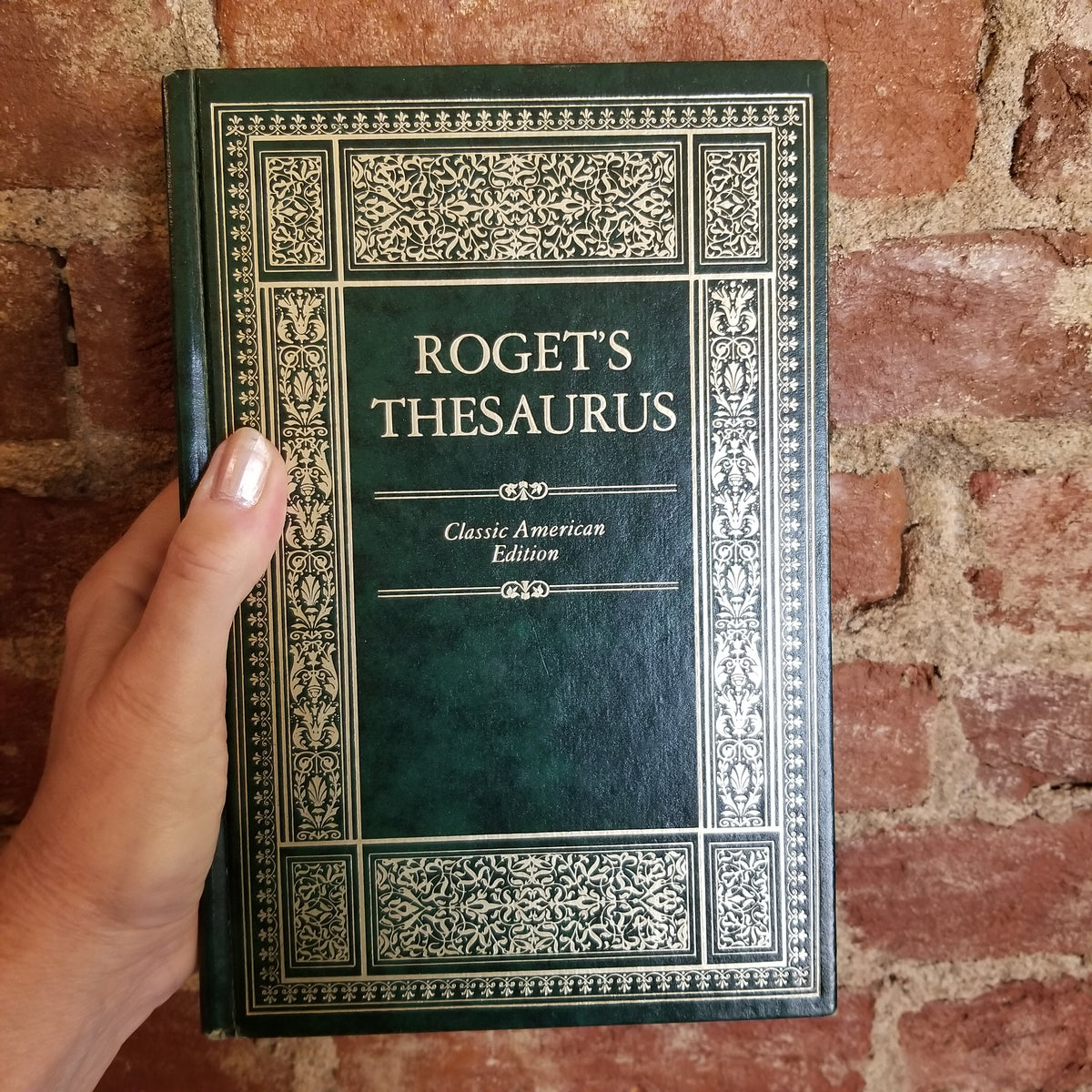
Roget's Thesaurus
Has a top reputation for its groupings and families of words. Used in deliverance to identify demon family groupings.

Demon Hit List - John Eckhardt
Discusses how the Roget's Thesaurus can be used to identify names and family groupings of demonic hierarchies.
The Resonant Universe: Unveiling the Connections Between Numerology, Sacred Geometry, and Metaphysical Harmony
1.0 Introduction: The Divine Blueprint of Word and Number
Since antiquity, mystics, scholars, and philosophers have sought to understand the universe not through its surface appearances, but through a hidden language believed to connect all of creation. This profound idea posits that the building blocks of reality—numbers, letters, and symbols—are not random human inventions but elements of a divine structure. This document explores the core principles of this worldview, examining the interconnected arts of occult numerology, sacred geometry, and the metaphysical concept of harmonic resonance. We will delve into how ancient traditions assigned numerical values to letters, transforming language into a key for unlocking cosmic secrets through practices like Hebrew Gematria and Greek Isopsephy.
The central thesis of this examination is that these systems are not mere superstitions but are, in fact, sophisticated frameworks for perceiving a divine order woven into the fabric of existence. Within this paradigm, words that share a numerical equivalence are believed to share a profound, resonant connection, revealing them to be different expressions of the same underlying universal law. For the practitioner, this is not symbolic but real—a tangible link between concepts as fundamental as love, will, and divinity itself.
This exploration aims to provide a clear and accessible examination of these principles for a reader with little prior background. Using foundational examples from the rich Hebrew and Greek traditions, we will demystify these ancient arts and illuminate the timeless human quest to read the hidden poetry of the cosmos.
2.0 The Secret Language: How Letters Become Numbers in Occult Numerology
In esoteric traditions, numerology is a foundational practice of strategic importance. It is the art of assigning specific numerical values to the letters of an alphabet, a process that transforms language from a simple tool of communication into a map of cosmic relationships. By calculating the numerical value of a word, practitioners believe they can uncover its essential nature and its hidden connections to other concepts, divine forces, and universal principles.
The practice is known by two primary names: Gematria, the term used in the Jewish Qabalistic tradition, and Isopsephy, its Greek equivalent. The fundamental concept is elegantly simple. The ancient Greeks made this abstract idea tangible by using a physical calculator: a pile of pebbles. To find the value of a word, they would create a separate pile of pebbles for each letter, corresponding to that letter’s value. By combining all the piles, the total number of pebbles would reveal the numerical value of the word.
Illustrating Gematria: The Number of Humanity
To see this process in action, we can deconstruct a foundational word in the Hebrew tradition: Adam (ADM), which means "humanity." The word is composed of three letters, each with a fixed numerical value.
| Hebrew Letter | Numerical Value | Contribution |
|---|---|---|
| Aleph (A) | 1 | 1 |
| Daleth (D) | 4 | 4 |
| Mem (M) | 40 | 40 |
By adding the value of each letter (1 + 4 + 40), we arrive at a total of 45. Through this calculation, the very concept of "humanity" becomes encoded with a specific numerical identity, a signature that can be compared to other words and ideas to reveal deeper connections.
The Power of Isopsephy: Love and Will
The true analytical power of these systems emerges when we compare the values of different words. One of the most famous examples, popularized by the 20th-century occultist Aleister Crowley, reveals a profound link between two powerful Greek concepts: Agape (Love) and Thelema (Will).
First, we calculate the value of Agape (αγάπη), the Greek word for divine, unconditional love.
| Greek Letter | Numerical Value | Contribution |
|---|---|---|
| α (Alpha) | 1 | 1 |
| y (Gamma) | 3 | 3 |
| α (Alpha) | 1 | 1 |
| π (Pi) | 80 | 80 |
| η (Eta) | 8 | 8 |
The total value for Agape is 1 + 3 + 1 + 80 + 8 = \textbf{93}.
Next, we perform the same calculation for Thelema (θέλημα), the Greek word for will or intention.
| Greek Letter | Numerical Value | Contribution |
|---|---|---|
| θ (Theta) | 9 | 9 |
| ε (Epsilon) | 5 | 5 |
| λ (Lambda) | 30 | 30 |
| η (Eta) | 8 | 8 |
| μ (Mu) | 40 | 40 |
| α (Alpha) | 1 | 1 |
The total value for Thelema is 9 + 5 + 30 + 8 + 40 + 1 = \textbf{93}.
For the esoteric practitioner, this numerical identity is not a coincidence; it is a revelation. The fact that Agape and Thelema both equal 93 is interpreted as a mystical truth: that Love and Will are expressions of the same underlying divine law. This specific calculation became a cornerstone of Crowley's spiritual philosophy, known as Thelema, where the number 93 is used to represent the union of "Love under Will."
This process of assigning numbers to words reveals a hidden architecture of meaning, which esoteric traditions then sought to map in visual and symbolic forms.
3.0 Cosmic Blueprints: Mapping Numerical Order with Sacred Geometry
Sacred geometry serves as the visual and structural expression of the numerical order uncovered by gematria and isopsephy. Ancient traditions viewed the universe as an ordered, intelligent system, and they created these "cosmic blueprints" to map its divine architecture. This practice was guided by the powerful Hermetic principle of "As Above, So Below," the idea that the patterns of the macrocosm (the universe) are perfectly reflected in the microcosm (the human being).
The Western Model: The Hebrew Tree of Life
The Qabalistic Tree of Life is arguably the most important cosmological model in the Western esoteric tradition. It functions as a comprehensive diagram of creation, mapping the descent of divine energy from pure spirit into the physical world. Its structure is composed of two main components:
- The 10 Sephiroth: These are ten numbered stations, or divine emanations, that represent the sequential stages of creation.
- The 22 Paths: These are the connections between the Sephiroth, with each path corresponding to one of the 22 letters of the Hebrew alphabet.
Together, these elements create what can be understood as a universal filing system for organizing every aspect of reality, from planets and elements to zodiac signs and states of consciousness.
- Sephirah 3 (Binah): Core Concept: Understanding (The Great Mother); Planetary Correspondence: Saturn
- Sephirah 6 (Tiphereth): Core Concept: Beauty / Harmony (The Son); Planetary Correspondence: Sun
- Sephirah 10 (Malkuth): Core Concept: The Kingdom (The Physical World); Planetary Correspondence: The Four Elements
The Eastern Model: The Chinese I Ching
The I Ching, or Book of Changes, is a foundational Eastern model for understanding the dynamic and cyclical patterns of the universe. It is built upon the interplay of two opposing but complementary principles:
- Yang (—): The active, creative, and masculine principle.
- Yin (--): The receptive, nurturing, and feminine principle.
These two forces combine in sets of three to form eight fundamental symbols known as Trigrams. Each trigram represents a core archetype of reality, often described through the language of family roles and natural imagery.
| Trigram Symbol | Name | Family Role | Core Natural Image |
|---|---|---|---|
| ☰ | Ch'ien | Father | Heaven |
| ☷ | K'un | Mother | Earth |
| ☳ | Chen | Eldest Son | Thunder |
| ☴ | Sun | Eldest Daughter | Wind/Wood |
| ☲ | Li | Middle Daughter | Fire |
| ☵ | K'an | Middle Son | Water |
| ☶ | Ken | Youngest Son | Mountain |
| ☱ | Tui | Youngest Daughter | Lake |
As Above, So Below: Mapping the Cosmos onto the Body
These grand maps were not merely abstract diagrams; they were believed to have a direct and intimate connection to the human form. The principle that the human being is a universe in miniature led to the development of the "zodiac of the human body," where cosmic forces were mapped onto human anatomy. While this was a common feature across traditions, the specific correspondences could vary.
The Zodiac of the Human Body
| Zodiac Sign | Corresponding Body Parts |
|---|---|
| Aries | Head (Traditional) / Right hand (Qabalistic) |
| Taurus | Throat, neck (Traditional) / Left hand (Qabalistic) |
| Gemini | Shoulders, arms, hands, lungs (Traditional) / Right foot (Qabalistic) |
| Pisces | Feet (Traditional) / Brain, heart (Qabalistic) |
This direct correspondence illustrates the ultimate purpose of these systems: to understand the universe was to understand oneself. The underlying structure revealed by sacred geometry is animated by an energetic principle that gives these connections their power: the principle of harmonic resonance.
4.0 The Principle of Resonance: Understanding Metaphysical Harmony
Within an esoteric context, harmonic resonance is a metaphysical principle, not a reference to physical sound waves. It is the core idea that concepts, words, or forces that share the same numerical signature are believed to "vibrate" with a similar universal energy. Because of this shared vibration, they are considered to be mystically connected, intertwined by the hidden architecture of the cosmos.
The central tenet of this principle is that when two different words or concepts are calculated to have the same numerical value, they are considered to be expressions of the same underlying divine force or universal law. This equivalence is not seen as symbolic or coincidental but as a tangible and profound reality.
The Isopsephy example of Agape (Love) and Thelema (Will) both equaling the number 93 serves as a perfect case study. The numerical identity between these two powerful concepts is interpreted as a deep, resonant link. For the founders of Thelema, this was not an intellectual curiosity but a divine revelation that formed the philosophical foundation of their entire spiritual system: the mystical union of Love and Will.
This belief in resonant power is not a modern invention. History provides other powerful examples of this principle in action. In early Christian mysticism, the Greek name for Jesus (ΙΗΣΟΥΣ) was calculated to have the value 888, a number seen as holding the sacred essence of the divine figure. Centuries earlier, an inscription reveals that King Sargon II of Assyria deliberately built the wall of his fortress to a length of 16,280 cubits—the exact numerical value of his name. This monumental act of architectural numerology demonstrates a profound belief that the king's power and identity were resonantly linked to the mathematical harmony of his kingdom.
The ultimate purpose of numerological practice is to discover these resonances. This pursuit transforms language from a simple tool for communication into what the source text calls "a map of the cosmos," inviting the practitioner to read "the hidden poetry written in the language of numbers." The discovery of these harmonies is the final goal, representing a direct glimpse into the divine mind.
5.0 Conclusion: The Enduring Quest for a Universal Language
This exploration has revealed a cohesive and sophisticated worldview, where distinct esoteric arts work in concert to unveil a hidden universal order. Occult numerology, through practices like Gematria and Isopsephy, provides a method for transforming words into numbers, thereby assigning them a core energetic value. Sacred geometry, through models like the Tree of Life and the I Ching, provides the structural map—the cosmic blueprint—upon which these values are organized. Finally, the principle of harmonic resonance provides the philosophical key that unlocks the map, explaining how concepts with the same numerical identity are mystically and powerfully connected.
Behind these intricate systems lies a profound and universal human drive. As the source material concludes, while the specific symbols and cultural expressions of these systems differ, their "underlying purpose remains identical: to create a sacred language of meaning that connects humanity to the universe." They represent a timeless and global effort to find order in the cosmos and to understand one's own life as part of a grand, intelligent design.
Ultimately, these esoteric arts are monuments to the enduring belief that reality is encoded with a divine intelligence. They are the tools forged by humanity in its timeless quest to decode that order and discover the universal grammar that unites all things—a quest for what some have called a "Divine Language of the Gods."