


Libido Dominandi (E. Michael Jones)

Overview
In Libido Dominandi, E. Michael Jones explores the historical thesis that sexual liberation has been systematically utilized as a sophisticated method of political and social control. The text traces a two-hundred-year trajectory from the Enlightenment and the Marquis de Sade to modern behavioral psychology and the advertising industry, arguing that inciting passions renders individuals more manageable by the state. By eroding traditional moral structures and the authority of the family, powerful elites utilize the resulting addictions and guilt to manipulate public behavior and suppress political opposition. Jones suggests that what is marketed as personal "freedom" is actually a form of bondage that replaces internal self-governance with external technological and psychic regulation. Ultimately, the work posits that a culture governed by unrestrained appetite inevitably leads to a totalitarian social order dominated by those who provide and regulate those gratifications.

In this historical and philosophical analysis, E. Michael Jones explores the thesis that sexual liberation is not a path to individual freedom, but rather a sophisticated mechanism of political control. The text traces a two-hundred-year trajectory from the Enlightenment and the Marquis de Sade to modern behavioral psychology, arguing that the incitation of passion serves to undermine the rational self-governance required for a healthy republic. By systematically dismantling traditional moral constraints through the promotion of pornography and contraception, elite "mandarins" and foundational institutions foster a state of addiction and guilt that renders the citizenry more susceptible to manipulation. Ultimately, the work asserts that the subversion of the moral order is a prerequisite for the subversion of the political order, transforming autonomous individuals into docile consumers and manageable subjects of a biocratic state.
Videos
The 200-Year Plan to Own You
The Kinsey Syndrome Documentary
Freedom or Control? Understanding the Central Ideas of Libido Dominandi
Introduction: The Central Paradox
At the heart of the text Libido Dominandi lies a central, counter-intuitive argument: that political and social movements promising “sexual liberation” are not pathways to freedom but are, in fact, sophisticated systems of societal control. This document will explore the historical idea that a population enslaved to its passions becomes easily governable by those who control the means of gratifying those passions. This is not a new concept; its roots are ancient, illustrated in the biblical story of Samson, whose strength was lost when he succumbed to his passion for Delilah, rendering him "Eyeless in Gaza at the Mill with slaves." This document will trace the intellectual lineage of this strategy, examining how a classical understanding of human weakness was weaponized into a modern technology of power.
1.0 The Foundational Concept: Libido Dominandi
The entire framework of the book rests on a classical understanding of human nature and power, articulated by St. Augustine and summarized by the Latin phrase libido dominandi.
1.1 The Two Cities of St. Augustine
St. Augustine, in his work defending Christianity after the fall of Rome, provided the core philosophical framework by dividing humanity into two symbolic cities, each defined by what it loves.
| City of God | City of Man |
|---|---|
| * Loves God to the extinction of self. | * Loves self to the extinction of God. |
| * Rooted in virtue and self-control. | * Characterized by the "passion for dominion." |
| * Seeks peace and order through divine law. | * Lusts to dominate the world. |
| * Represents the pursuit of true, lasting freedom. | * Pursues the domination of others while being dominated by its own passions. |
1.2 The Paradox of Power
Augustine’s "City of Man" is driven by the core concept of libido dominandi, which translates directly to the "passion for dominion." This concept contains a profound paradox. The City of Man is described as “lusting to dominate the world" but at the same time is:
…itself dominated by its passion for dominion.
This is the essential insight: those who seek to control others by inciting and manipulating passions are themselves slaves to the very passions they exploit. They promise freedom but are themselves unfree, bound by the same appetites they use as tools of political and social control.
Having established this classical understanding of passion as a form of bondage, we can now turn to the audacious intellectual maneuver of the Enlightenment: not to refute Augustine’s psychology, but to seize it and invert its values, transforming a diagnosis of slavery into a blueprint for a new political project.
2.0 The Enlightenment's Great Reversal
To engineer a new political order based on control, the thinkers of the Enlightenment first needed to perform a philosophical demolition. In order to create a "physics of vice"—a system for manipulating human beings as predictably as particles in an equation—they first had to redefine man as a particle. They adopted Augustine’s framework of human psychology but reversed its moral values, rejecting the idea that passion must be governed by reason and instead building a project based on passion as the primary mover of human action—and therefore as the primary lever of control.
2.1 A New View of Humanity: Man as Machine
Enlightenment philosophy initiated a profound shift toward a materialist worldview. Thinkers like Baron d'Holbach argued that the universe is only "matter and motion" and that a man’s actions are merely the "necessary effects" of the qualities infused in him by Nature.
The implication of this philosophy is revolutionary: If a human being is just a machine without a soul or free will, he can be controlled, programmed, and manipulated like any other physical object.
The Marquis de Sade represents the ultimate and most honest expression of this philosophy. He defined the Enlightenment "philosopher" as one who:
"sates his appetites without inquiring to know what his enjoyments may cost others, and without remorse."
The direct consequence of Sade's thinking is that the moment man is "liberated" from the moral law, he is not freed, but merely transferred to a new master: his own appetites, and by extension, the social engineers who promise to gratify them.
2.2 A Blueprint for Control: The Illuminati
This Enlightenment philosophy found a practical, organizational expression in the secret society founded by Adam Weishaupt: the Illuminati. While short-lived, its significance lay in its method of internal organization, which created an extremely subtle system of control based on the manipulation of the passions, borrowing techniques from both the Jesuits and the Freemasons.
The Illuminati's most important techniques for control were:
- Mutual Spying: Through a system of monthly reports known as Quibus Licet, members were required to spy and report on one another. Superiors compiled these reports, creating detailed files on each member's character, weaknesses, and passions. This system created a precursor to the modern police state, where universal surveillance ensures compliance.
- Spying on the Soul: Weishaupt and his collaborator, von Knigge, developed a technique they called "Seelenspionage" (spying on the soul). This involved a "Semiotik der Seele" (a semiotics of the soul), whereby superiors would closely analyze an adept's gestures, expressions, and words to access their true feelings and vulnerabilities. This psychological knowledge was not for healing but for control, allowing superiors to manipulate a member by appealing to his deepest passions and fears.
These Enlightenment blueprints—both philosophical and organizational—would be refined and scaled in the 20th century through the development of "scientific" disciplines of mass control.
3.0 The "Scientific" Technologies of Control
The principles articulated during the Enlightenment were modernized and systematized into powerful psychological technologies. These new "sciences" provided the tools for manipulating entire populations by appealing directly to their passions, bypassing reason and morality.
3.1 Psychoanalysis: Spying on the Soul for Profit and Power
Psychoanalysis, as presented in the source text, is not primarily a healing medicine but a modern, "scientific" form of Illuminism—a tool for manipulation. In a direct echo of Weishaupt's Seelenspionage, Freud's analysis of his patients' hidden desires became a commercialized version of "spying on the soul." Its primary function in this context is to manage guilt. It allows wealthy patients to continue indulging in their vices while paying their therapist for absolution, effectively binding the patient to the analyst in an exploitative financial relationship.
The conflict between Sigmund Freud and Carl Jung is described not as a disagreement over ideas, but as a power struggle over "control of a movement" and its significant financial resources. The predatory nature of the practice is illustrated by Freud's own thinking. As the source text explains, Freud adopted a cartoon as a personal metaphor:
Freud's best explanation of his relationship to his patients came in the form of a cartoon... in which a lion looks at his watch and mutters, "Twelve o’clock and no Negroes." Freud was the lion, and in his letters to Fliess thereafter he referred to his patients as "Negroes," which is to say, something to eat.
The ultimate purpose attributed to psychoanalysis is revolutionary: to subvert the Christian moral order by exploiting the universal human desire for confession, turning a sacrament for healing into a technique for control.
3.2 Behaviorism: Programming the Human Machine
John B. Watson's Behaviorism is presented as a technology explicitly designed to "predict" and "control" human behavior. Its foundational premise is that humans are organic machines without an inner consciousness or reason. In this view, people do not act with purpose; they can only react to external stimuli.
The core flaw of this model is that by denying reason, it denies the very basis of human freedom and self-governance. Its primary application, however, was in the creation of the modern consumer. The ideal consumer created by mass-media advertising is: "reactive, suggestible, and impulsive."
Behaviorism provided the "instrumental rationality" needed for a new system of social control. By dissolving traditional guides for human conduct—such as family, religion, and community—it created a vacuum. This vacuum was then filled by new authorities, such as mass-media advertising and "science," which could manipulate the passions of the newly "liberated" masses for commercial and political ends.
These different streams of thought—philosophical, organizational, and "scientific"—all converge into a single, powerful strategy of control.
4.0 The Grand Strategy: How Liberation Leads to Bondage
The overarching mechanism connecting these concepts is a hidden, or esoteric, doctrine of the Enlightenment, a "physics of vice" that can be stated simply:
"Incite the passion; control the man."
This grand strategy unfolds in a two-step process:
- First, "liberate" the population from the moral order. This is achieved by encouraging the gratification of illicit passions under the banner of freedom, self-fulfillment, and "science."
- Second, control the newly "liberated" populace. Once a person defines freedom as the gratification of appetite, they become a slave to that appetite. Consequently, they become a slave to those who control the means of gratification—the media, the advertisers, the pornographers, and the political engineers. "Liberty" becomes synonymous with bondage.
The following table synthesizes how this strategy plays out across the different conceptual frameworks described in the text.
| The Philosophy | The Promise of "Liberation" | The Reality of Control |
|---|---|---|
| The Enlightenment | To free humanity from the "superstitions" of morality and religion, creating a rational paradise on earth. | Redefines man as a machine without free will, making his passions the primary levers for social engineers to achieve political control. |
| Psychoanalysis | To liberate the individual from the guilt and repression caused by an outdated moral code. | Creates a new priestly class that controls individuals by monetizing the management of their guilt, a secular perversion of confession. |
| Behaviorism | To create a scientifically managed society where human behavior can be perfected and guided by experts. | Engineers a new human type—the passive consumer—by systematically dismantling the sources of self-governance (reason, family, faith) and replacing them with external, manipulable stimuli. |
This historical conflict between defining freedom as the rule of reason versus the rule of passion remains central to understanding the modern relationship between the individual and society.
5.0 Conclusion: The Enduring Conflict
This document has traced a central argument from the source text: that defining "liberty" as the ability to gratify illicit passion is a carefully laid trap. This definition transforms the very meaning of freedom into its opposite, making it synonymous with bondage, because "he who controls the passion controls the man."
The ultimate takeaway for the learner is that, according to this historical analysis, true freedom is not found in the external "liberation" of appetite but in internal self-control, governed by reason and a moral framework. Ultimately, this analysis presents the learner with an enduring question: is freedom the mastery of oneself through reason, or is it the gratification of appetite? The answer, according to the source, determines whether one is a citizen or a subject, self-governed or perpetually governed by others.
Key Figures in the Battle of Ideas: Passion, Reason, and Social Control
To understand the modern intellectual landscape, we must first turn to an ancient concept articulated by St. Augustine: Libido Dominandi, or the lust for dominion. He argued that the City of Man—the realm of worldly power—is driven by a desire for control that is fundamentally paradoxical. It is a project practiced by those who are themselves enslaved by the very passions they incite in others to achieve power. As Augustine framed it:
Augustine describes the City of Man as “lusting to dominate the world" but at the same time “itself dominated by its passion for dominion.”
This fundamental dichotomy between loving God (which aligns with reason and order) and loving self (which aligns with passion and control) provides the essential lens through which to analyze the intellectual projects of the key figures who shaped our modern world. This ancient Augustinian framework, however, underwent a dramatic inversion during the Enlightenment, which sought to re-evaluate the very nature of passion and reason.
2. The Enlightenment's Great Reversal
The revolutionaries of the Enlightenment did not create a "new man"; rather, they adopted St. Augustine's worldview and systematically reversed its core values. This monumental shift is best understood as a direct inversion of principles, transforming traditional vices into celebrated virtues.
| Augustinian View | The Enlightenment Reversal |
|---|---|
| The state of the moral man is tranquility and peace. | Passion is promoted as a civic virtue. |
| The state of an immoral man is one of perpetual unrest. | Moral constraints are seen as obstacles to liberation. |
| Reason and faith are the basis of a just order. | Materialism and the sating of appetites are the new basis for "philosophy." |
A primary example of this reversal in practice can be found in the work of Adam Weishaupt and his secret society, the Illuminati. While short-lived, the organization was significant for its sophisticated methods of internal control, which were designed to manipulate its members for political ends. The key features of Weishaupt's system include:
- Systematic Manipulation: Borrowing organizational structures from the Jesuits and Freemasons, Weishaupt created an extremely subtle system of control based on the deliberate manipulation of human passions.
- Psychological Espionage: The system featured a technique known as "Seelenspionage" (spying on the soul). Superiors would analyze an adept's seemingly random gestures, expressions, and words to discern their true feelings and weaknesses. In a chilling prefiguration of 20th-century totalitarianism, Weishaupt's system produced dossiers on his members that the source likens to a combination of "the Kinsey sexual history, the Stasi file, and credit rating all rolled up into one document whose purpose is control."
- Control through Confession: Weishaupt's system perverted the concept of confession, stripping it of any moral or spiritual purpose. It was transformed into a pure technique of psychic control, where knowledge of a person's inner life became a tool for their exploitation and manipulation.
The theoretical machinery of control developed during the Enlightenment found its most radical philosophical and personal expression during the tumultuous era of the French Revolution.
3. Voices from the Revolutionary Era
3.1. Marquis de Sade: The Architect of "Liberation"
The Marquis de Sade stands out as the key philosopher who articulated the central premise of sexual liberation. He defined this new liberation with chilling precision, writing that “the philosopher… sates his appetites without inquiring to know what his enjoyments may cost others, and without remorse.”
Crucially, Sade understood that this form of "liberation" was not an end in itself, but rather a means to achieve political control. He envisioned a two-step process:
- Liberation: First, by transforming human beings into machines governed solely by appetite, all moral constraints are systematically removed.
- Control: Second, this newly "liberated" sexual energy can be harnessed and redirected for extrinsic political use. As the source text summarizes, "The minute after man gets liberated, he gets controlled."
3.2. Mary Wollstonecraft: The Personal Reckoning with Passion
Mary Wollstonecraft represents a powerful counterpoint to Sade, as her life became a personal testament to the conflict between revolutionary ideals and their real-world consequences. During her time in Paris, she entered into an affair with Gilbert Imlay, an American adventurer she initially found "morally repugnant." Despite her intellectual commitments to reason, she found herself completely overcome by passions for him.
This painful experience led her to a profound conclusion about the necessary relationship between reason and passion. In a letter to Imlay, she reflected that the highest forms of love—those over which satiety has no power—are impossible without the guiding hand of reason and discipline.
Ah! my friend, you know not the ineffable delight, the exquisite pleasure, which arises from a unison of affection and desire, when the whole soul and senses are abandoned to a lively imagination, that renders every emotion delicate and rapturous. Yes; these are emotions over which satiety has no power, and the recollection of which, even disappointment cannot disenchant: but they do not exist without self-denial.
Her life thus serves as a powerful argument that lasting love requires reason to tame and elevate appetite—a direct challenge to the revolutionary call to gratify all passions without restraint. As the revolutionary era gave way to the 20th century, these philosophical battles were repackaged in the language of modern "science," giving rise to new technologies of control.
4. The 20th Century: "Science" as the New Mechanism of Control
4.1. John B. Watson: The Behaviorist as Controller
John B. Watson, the founder of Behaviorist psychology, developed a system that was a perfect theoretical mirror of his personal failings. Watson's personal chaos was not incidental to his work; it was its very blueprint. Unable to achieve self-control in his own life, he constructed a formal psychology where the concept itself was rendered meaningless. As the source states, "Rather than admit that he had no self-control, Watson decided to create a psychology where the concept of self-control has no meaning."
The core features of Behaviorism as a technology of control are:
- Denial of the Inner World: Watson's psychology jettisoned concepts like consciousness, reason, and self-control. It reduced human beings to organic machines who can only react to external stimuli, rather than act based on internal deliberation.
- A Technology of Control: Because it cannot explain human action (which requires reason), Behaviorism is not a true psychology. Instead, it is "a technology of psychic control" that explains how people can be manipulated by those who control their external environment.
- The Consumerist Application: This worldview provided "an instrumental rationality for manipulating the control of emotions," making it perfectly suited for the age of mass advertising. It offered a scientific blueprint for creating the ideal consumer: a person who is "reactive, suggestible, and impulsive."
4.2. Sigmund Freud: The Revolutionary as Therapist
Sigmund Freud's psychoanalysis, in this analysis, appears not as a form of medicine but as a "scientific" recasting of Illuminism—a sophisticated system of manipulation designed for social and political subversion. Key claims about Freud's project include:
- Control through Guilt: Psychoanalysis is described as a tool to control wealthy patients by managing their guilt, absolving them of their vices for a price, and thereby binding them in a state of dependency on the therapist. The source reveals Freud's predatory view of this relationship through his private correspondence, where he referred to his patients as "Negroes"—adopting the punchline from a popular cartoon—to signify they were something to be consumed for his financial and psychological sustenance.
- The Oedipus Complex as Projection: The Oedipus Complex was not a universal scientific discovery but rather Freud's projection of his own guilt over a personal affair with his sister-in-law, Minna Bernays. By transforming his personal failing into a universal law, he could absolve himself of moral responsibility.
- A Revolutionary Project: Freud envisioned his movement as a secret society aimed at overthrowing the traditional Christian social order, which he code-named "Rome." The epigraph from his book The Interpretation of Dreams reveals this hidden political agenda:
These individual figures, from the Enlightenment salon to the Viennese consulting room, form a clear historical trajectory built on a single, unifying idea.
5. Conclusion: The Unifying Thesis
The historical trajectory presented here traces a consistent and evolving idea: the promise of "liberation" from the moral order has, at each stage, been refined into a more sophisticated instrument of social and political control. This intellectual project has been advanced by key thinkers who, whether consciously or not, provided the philosophical and technical tools for this transformation.
Each figure represents a crucial stage in this evolution:
- Marquis de Sade provided the raw philosophical blueprint, defining liberation as the remorseless satisfaction of appetite.
- Mary Wollstonecraft embodied the tragic personal consequences of a life governed by passion untempered by reason.
- John B. Watson and Sigmund Freud created the modern, "scientific" technologies—behaviorism and psychoanalysis—to implement this control on a mass scale.
Their combined work culminates in what the source text calls the esoteric doctrine of the Enlightenment, a simple but powerful formula for power:
"Incite the passion; control the man."
From Moral Authority to Psychological Manipulation: An Examination of Sexual Liberation as an Instrument of Social Control
This paper advances the thesis that the concept of "sexual liberation," an idea with roots in Enlightenment philosophy, has been consistently developed and deployed not as a means of authentic human freedom, but as a sophisticated and effective instrument of social and political control. It will be argued that what is often presented as a movement of emancipation is, in fact, the culmination of a centuries-long project to supplant the moral order—governed by reason—with a new paradigm in which human beings, driven by passion, become susceptible to manipulation by a ruling elite. This analysis will trace the historical and intellectual trajectory of this idea, from its theoretical origins in Enlightenment materialism and its early practical application in secret societies like the Illuminati, to its "scientization" in the 20th century through the disciplines of psychoanalysis and behaviorism.
The paper will proceed by first examining the philosophical foundations of passion-based control, showing how Enlightenment thinkers inverted traditional moral hierarchies to provide a justification for their methods. Next, it will analyze the pivotal 20th-century transformation of these esoteric doctrines into publicly accepted "sciences," focusing on the roles of Freudian psychoanalysis and Watsonian behaviorism. The subsequent section will detail the mid-century institutionalization of these techniques by powerful philanthropic foundations and government agencies to achieve specific social engineering goals. Finally, we will demonstrate how this long development culminated in the sexual revolution, which served as the vehicle for a widespread re-engineering of modern culture and the consolidation of a new form of mass control. This historical examination reveals a consistent, underlying logic: that the gratification of illicit passion is not a path to liberty but a prelude to a more insidious form of servitude.
1.0 The Philosophical and Historical Foundations of Passion-Based Control
Before the modern, "scientific" methods of psychological control could be developed and deployed on a mass scale, a foundational revolution in philosophy was necessary. This intellectual shift was crucial for inverting the traditional moral order of the West, which held that reason should govern the passions. Enlightenment thinkers undertook a radical project to replace this hierarchy, arguing that passion, desire, and material forces were the true guiding principles of human life. By doing so, they provided the philosophical framework for a new, and deeply subtle, model of social control based not on overt force, but on the covert manipulation of human desire.
The traditional understanding of disordered desire was articulated with definitive clarity by St. Augustine, whose concept of Libido Dominandi—the passion for dominion—provides the foundational understanding of this dynamic. Augustine divided the world into two symbolic cities: the City of God, whose inhabitants love God to the point of self-abnegation, and the City of Man, whose inhabitants love themselves to the point of abandoning God. He described the latter as being animated by a paradoxical force: it is a city "lusting to dominate the world" while being "itself dominated by its passion for dominion." This insight reveals that the will to power is invariably practiced by those who are themselves enslaved to the very passions they incite in others to control them.
The Enlightenment project, as the source material contends, was not merely an abandonment of this Augustinian worldview but a deliberate inversion of it. Thinkers of this era took Augustine's framework of the City of Man ruled by passion and, instead of condemning it, rebranded it as the basis for a new kind of "liberty." Materialist philosophers like Baron d'Holbach transformed morality into a function of physics, arguing that human actions are merely the "necessary effects of those qualities infused into him by Nature." This reductionist view provided an intellectual justification for the Marquis de Sade’s work, which can be seen as providing a literary and philosophical corollary to this materialist worldview, one that offered a framework for achieving the "sating of passion without remorse." If human beings are merely machines governed by appetites, then morality becomes a meaningless constraint, and the gratification of desire becomes the ultimate expression of "liberty."
This new model of passion-based control found its first systematic application in Adam Weishaupt's secret society, the Illuminati. Formed in 1776, the Illuminati adapted the hierarchical structures of the Jesuits and the secretive fellowship of the Freemasons to create what the source describes as "an extremely subtle system of control based on manipulation of the passions." Weishaupt understood that knowledge of an individual's innermost desires, weaknesses, and transgressions was the ultimate key to power.
The specific techniques employed by the Illuminati reveal a sophisticated understanding of psychological manipulation. The order utilized a monthly reporting system known as Quibus Licet, through which superiors gathered detailed information on the lives of lower-ranking members. Going further, Weishaupt developed a practice of Seelenspionage ("spying on the soul"), a method of analyzing an adept's gestures and expressions to betray their true feelings—a system his associate, von Knigge, termed a "semiotics of the soul." A striking example of this method is the detailed file kept on Franz Xaver Zwack, which documented everything from his physical characteristics and friendships to his "Principle Passions," which included "pride, and a craving for honors." This systematic collection of personal information, combining a confessional history with a credit rating and a Stasi file, served the explicit purpose of control. These early, secretive models of control laid the groundwork for what would follow, as the core principles of Illuminism evolved from the esoteric doctrines of a secret society into the publicly accepted disciplines of "scientific" psychology.
2.0 The 'Scientization' of Psychic Control in the 20th Century
The 20th century marked a pivotal shift in the application of passion-based control. During this period, the esoteric doctrines of the Enlightenment and the conspiratorial techniques of the Illuminati were repackaged and legitimized as objective, therapeutic sciences. The emergence of psychoanalysis and behaviorism provided a "scientific" veneer to the project of manipulation, making these methods vastly more powerful and socially acceptable as instruments of control. By cloaking the manipulation of desire in the language of medicine and therapy, these new disciplines enabled social engineers to operate on a scale previously unimaginable.
2.1 Psychoanalysis as a Technology of Manipulation
Sigmund Freud's psychoanalysis, the source argues, can be understood as a "scientific" form of Illuminism. It functions not as a form of medicine designed to heal, but as a secular confessional designed to manage guilt and control patients. By fostering behavior that creates guilt, the psychoanalyst binds the patient to an exploitative relationship, offering absolution in exchange for money and influence. Freud’s revolutionary program is cryptically signaled in the epigraph to his foundational work, The Interpretation of Dreams: "Flectere si nequeo superos, Acheronta movebo" ("If the powers above ignore me, I will move the powers of hell"). The source interprets this as a deliberate strategy to subvert the Christian social order of Europe. Psychoanalysis was conceived as a "Jewish" secret society, a subversive movement designed to topple "throne and altar." Crucially, the source argues that Freud was essentially adopting and weaponizing the very anti-Semitic tropes of his time. Aware of the conflation of "Jew-Freemason-Revolutionary" in reactionary literature, Freud is portrayed as having created a psychoanalytic movement that deliberately embodied those fears in order to subvert the established social order from within.
The historical conflict between Freud and his protégé Carl Jung is presented not as a substantive ideological dispute, but as a power struggle over who would control this "emerging technology of psychic control." Both men recognized that psychotherapy was a powerful tool for manipulating the wealthy, who were willing to pay handsomely to be absolved of guilt while continuing to indulge in the vices that caused it. The source portrays Freud's view of this relationship as fundamentally predatory, a conclusion it supports with a private joke in which he referred to his patients as "Negroes" to be consumed, a sentiment exposing the exploitative core of his therapeutic model.
2.2 Behaviorism and the Engineering of the Mindless Consumer
The development of behaviorism by John B. Watson represents another key moment in the scientization of control. The source argues for a psychobiographical interpretation of behaviorism, positing that Watson's entire psychological system was born from his personal inability to govern his own sexual impulses. As a man who felt controlled by external stimuli, he created a psychology in which self-control had no meaning. "I get rather disgusted sometimes," Watson wrote, "with trying to make the human character amenable to law." Rather than admit his own lack of self-control, he projected his failings onto humanity, creating a system that denied the existence of reason and consciousness.
The core premise of behaviorism is the reduction of human beings to a series of manipulable stimulus-response mechanisms. It is, as the source asserts, "not a psychology at all; it is a technology of psychic control." This technology proved immensely valuable to the emerging powers of the 20th century, becoming the practical fulfillment of the Enlightenment project to control a populace by appealing to passion over reason—a project previously confined to the theoretical realm of philosophers like d'Holbach or the secret societies of the Illuminati. Figures like Edward Bernays, Freud's nephew, and the public intellectual Walter Lippmann applied behaviorist principles to public relations and advertising. Their goal was to erode traditional authorities—family, religion, community—and create a nation of "mindless consumers" driven by irrational passion. This new man, as envisioned by advertisers, was to be "reactive, suggestible, and impulsive," his choices dictated not by reason but by scientifically crafted appeals to his desires.
3.0 Mid-Century Institutionalization and Application
The psychological theories developed by Freud and Watson did not remain confined to academic journals or therapeutic clinics. In the mid-20th century, they were actively funded, refined, and deployed by a network of powerful philanthropic foundations and government intelligence agencies. This section will explore how institutions like the Rockefeller Foundation and alumni of the OSS and CIA systematically applied these techniques of psychological manipulation to achieve specific social engineering objectives, demonstrating a clear strategic intent to reshape American culture and neutralize political opposition.
3.1 The Rockefeller-Kinsey Nexus: Weaponizing Sex Research
The Rockefeller Foundation's funding of Alfred Kinsey's sex research in the 1940s stands as a primary example of this institutional application. The source argues that this support was a direct extension of the behaviorist project to use "science as a tool for controlling human behavior." The foundation's interest was not in objective scientific discovery but in leveraging sexuality for social control.
A key technique Kinsey used to ensure compliance and continued funding was a form of psychological manipulation he called "the treatment." He would insist on taking the detailed sexual histories of the very foundation heads and researchers who controlled his funding, including powerful figures like Alan Gregg of the Rockefeller medical division and the primatologist Robert Yerkes. According to the source, this practice functioned as a powerful form of blackmail. Once Kinsey possessed a record of the most intimate details of these men's lives, he held significant power over them via the implicit threat of exposure. The source makes it clear that "sexual liberation is a form of social control," and it was precisely for this reason that the Rockefeller Foundation was interested in Kinsey's work. It fit perfectly within their broader research into psychological warfare, providing a powerful tool for destabilizing traditional moral norms under the guise of scientific inquiry.
3.2 Psychological Warfare and the 'Therapeutic State'
After World War II, a network of alumni from the Office of Strategic Services (OSS) and its successor, the Central Intelligence Agency (CIA), came to populate the staff and directorships of the major philanthropic foundations, including Ford, Rockefeller, and Carnegie. This same group also took leading roles in university social science departments, creating an interlocking directorate of influence over American intellectual life. This "anglophile elite"—defined by the source as a network of Ivy League-educated, largely Protestant figures who viewed the Catholic Church as a rival power structure—shared a common agenda to promote a secular, progressive society.
This network promoted a distinctly anti-Catholic agenda, supporting figures like Paul Blanshard, whose book American Freedom and Catholic Power was lauded by establishment figures such as McGeorge Bundy and John Dewey. Blanshard's work framed the Church as a totalitarian threat, aligning with the elite's desire to neutralize its political influence. The source presents the subsequent deployment of psychological tools not as a coincidence, but as a direct transposition of wartime psychological warfare techniques from foreign enemies to domestic targets. Carl Rogers's development of "encounter groups" is presented as a prime example of therapy being used as a political weapon. The case of the Immaculate Heart of Mary (IHM) nuns in Los Angeles serves as a stark illustration. Rogers was hired to conduct sensitivity training for the order, a process that systematically dismantled its internal cohesion by fostering "individual independence" over "unquestioning institutional loyalty." The source contends that this was not therapy but a targeted act of social engineering—psychological warfare designed to deconstruct a religious order from within. These targeted applications of psychological techniques were a prelude to the much broader cultural revolution they would ultimately enable.
4.0 The Culmination: Sexual Revolution as Mass Social Control
The decades of philosophical development and psychological experimentation detailed in the previous sections culminated in the sweeping cultural upheavals of the post-war era. During this period, the principles of passion-based manipulation were deployed on a mass scale, with "sexual liberation" becoming the primary vehicle for a fundamental re-engineering of Western society. This was not a spontaneous uprising but the strategic application of a well-honed technology of control, aimed at dismantling the final pillars of the traditional moral order.
The psychoanalyst Wilhelm Reich provided a key part of the intellectual architecture for this revolution. Reich identified sexualization as the "mortal foe of religion," arguing that belief in God was psychologically rooted in the suppression of sexual desire. His revolutionary strategy was therefore explicitly sexual. The source presents Reich's advocacy for encouraging masturbation and pre-marital sex in youth not just as a psychoanalytic theory, but as a practical, behaviorist-style technique for mass conditioning. By normalizing this behavior, he believed one could condition a population away from belief in paternal authority and, by extension, God the Father, thereby creating a more manipulable social subject.
The source argues that the 1960s sexual revolution was, in effect, a targeted demographic and political attack on Catholics, who represented the last major institutional opposition to the eugenics regime promoted by the nation's ruling elite. Catholic political power, it is specified, was rooted in demographics: "large families and a moral code that prohibited contraception." The widespread promotion of contraception, heavily funded by the Rockefeller and Ford Foundations, was therefore a strategic campaign to neutralize this specific power base by dismantling its demographic engine.
The political defeat of the Moynihan Report in 1965 marks a pivotal moment in this cultural shift. The report, a policy initiative rooted in Catholic social teaching, identified the breakdown of the family as the core of social decay and sought to strengthen it. The source posits that the ascendant liberal paradigm could not tolerate a policy that identified the restoration of a moral order—the family—as the solution to a social problem. Such a premise directly conflicted with the core tenet that liberation from that very order was the ultimate goal. The proposal was thus defeated by the Left because its call to reinforce traditional family structures carried what opponents called "inevitable overtones of immorality."
This project's ultimate political logic, as articulated by thinkers like Michel Schooyans cited in the source, is a multi-stage process of control. It begins with "the incitation to sexual vice," which makes individuals slaves to their passions. This is followed by "the colonization of the procreative powers," as contraception and abortion sever sexuality from its natural end. The final stage is "the political mobilization of the guilt which flows from the misuse of procreative power in an all-encompassing system." In this final form, a population ruled by disordered desire becomes perfectly manageable.
5.0 Conclusion
This paper has traced the historical and intellectual lineage of an idea: that sexual liberation can function as a powerful instrument of social control. We have followed this concept's trajectory from its origins in the Enlightenment's philosophical inversion of the moral order, through its systematic application in secret societies, to its refinement into "scientific" techniques of psychological manipulation in the 20th century. The central argument has been that what is presented as a movement of emancipation is, in reality, a sophisticated system for controlling populations by appealing to, and ultimately enslaving them through, their passions.
The key stages of this development are clear. The process began with the materialist philosophies of the Enlightenment, which provided the intellectual justification for replacing reason with passion as the guiding principle of human life. This new paradigm was first weaponized in the Illuminist model of control, which used the systematic discovery and exploitation of personal weakness as its primary tool. In the 20th century, these esoteric techniques were "scientized" through Freudian psychoanalysis, which turned the confessional into a mechanism of manipulation, and Watsonian behaviorism, which provided a technology for engineering a society of suggestible consumers. Finally, these methods were institutionalized by powerful foundations and intelligence agencies, which funded their application in psychological warfare campaigns aimed at dismantling traditional sources of authority, culminating in the mass social engineering project of the sexual revolution.
The central thesis is therefore reaffirmed: sexual liberation, as defined and promoted by these forces, has consistently functioned as an instrument of social control, not of genuine freedom. The esoteric doctrine of this entire project is captured in the simple maxim: "Incite the passion; control the man." The ultimate result, as the source material makes clear, is a profound paradox. The modern pursuit of "liberty" through the uninhibited gratification of illicit passion does not lead to freedom but to a more complete and insidious form of bondage. In seeking to become masters of their own desires, individuals become thralls to both the passions they can no longer control and the "invisible rulers" who have perfected the science of manipulating them.
Libido Dominandi: An Analysis of Sexual Liberation as a Mechanism of Social Control
Introduction: The Paradox of Power
This analysis traces the history of a potent and enduring political idea: that sexual liberation, far from being a genuine expression of individual freedom, has served as a sophisticated mechanism of social and political control. It is the intellectual history of a doctrine, refined over two centuries, which posits that by systematically inciting and manipulating human passions, a ruling class can achieve a more profound form of dominion than could ever be accomplished through overt force.
At the core of this strategy lies the concept of Libido Dominandi—the passion for dominion—as described by St. Augustine in his critique of the Roman Empire. Augustine identified a fundamental paradox within the City of Man: it is a society that “lust[s] to dominate the world” but is, at the same time, “itself dominated by its passion for dominion.” Those who seek to control others by appealing to their base appetites are themselves slaves to the very passions they manipulate. In this grim calculus, the would-be masters are ultimately as enthralled as those they seek to subjugate.
This document will trace the historical trajectory of this idea, from its philosophical roots in Enlightenment materialism to its practical application in 20th-century psychology, advertising, revolutionary politics, and mass media. Drawing exclusively upon the provided source material, this analysis will demonstrate how a consistent esoteric doctrine—incite the passion; control the man—has been the engine of social engineering for generations. We shall begin by examining the intellectual origins of this mechanism of control, born from the radical philosophies of the Enlightenment.
Part I: Enlightenment and Revolutionary Origins
1. The Enlightenment's Materialist Philosophy: Removing the Moral Obstacle
The intellectual foundation for harnessing passion as an instrument of control was strategically laid by the materialist philosophy of the Enlightenment. To “liberate” humanity for manipulation, it was first necessary to demolish the primary obstacle to such a project: the traditional moral order. This required a redefinition of human nature itself, a philosophical maneuver undertaken by thinkers who provided the rationale for dismantling ethics.
Philosophers like Baron d'Holbach and Julien Offray de la Mettrie argued that human beings were not spiritual entities endowed with reason and free will, but were merely complex “machines” or matter in motion. By reducing humanity to a set of physical causes and effects determined by “Nature,” they nullified the basis of traditional morality. If a person’s actions are the “necessary effects of those qualities infused into him by Nature,” then concepts of virtue, vice, and remorse become meaningless. This philosophical shift made liberation from the moral law seem not a transgression, but a logical consequence of embracing the natural world.
The practical outcome of this worldview was articulated with brutal clarity by the Marquis de Sade, a man who would later be described as a “shameful ruin,” his physical state the very emblem of his philosophy's human cost. He provided a working definition of the new Enlightenment man, the “philosopher”:
“[He] sates his appetites without inquiring to know what his enjoyments may cost others, and without remorse.”
In this single phrase, Sade captures the essence of a liberation founded on materialism. It is the satisfaction of passion without guilt, justified by a philosophy that transforms human beings into machines and, consequently, all sexual activity into a form of masturbation. Once this intellectual demolition was complete, it was only a matter of time before social engineers began to devise ways to harness this newly “liberated” energy. This philosophical groundwork provided the justification for the first systematic application of these ideas for control by a secret society known as the Illuminati.
2. The Illuminati: A Blueprint for Psychic Control
While the Illuminati's direct political effectiveness was limited, its true historical significance lies not in its accomplishments but in its methodology. Founded by Adam Weishaupt, a law professor at the University of Ingolstadt, the organization created a subtle and powerful blueprint for psychic control based on the systematic manipulation of human passions. Weishaupt’s genius was to synthesize two seemingly opposed organizational models: the spiritual discipline of the Jesuits and the fraternal structure of Freemasonry.
Weishaupt appropriated the Jesuit “examination of conscience” but stripped it of its spiritual purpose—the salvation of the soul—and repurposed it for worldly control. Within the Illuminist structure, this became an instrument of surveillance, not spiritual guidance. The system was based on two key techniques:
- Seelenspionage (Spying on the Soul): Superiors were trained in a Semiotik der Seele, or semiotics of the soul, analyzing an adept's gestures, expressions, and words to discern their true feelings and weaknesses.
- Quibus Licet (Reporting System): A hierarchical system of monthly reports in which members spied on one another, with information flowing up the chain to the order's general. Only the superiors knew the full details contained in these reports.
The file kept on Franz Xaver Zwack illustrates the system's practical application. This document was a combination of a sexual history, a police dossier, and a credit report. It contained meticulous details on Zwack's physical characteristics, aptitudes, friends, and, most importantly, his "Principle Passions," which included "pride, and a craving for honors." This personal data was collected for the explicit purpose of control, with notes on how to best manipulate him by couching communications "in a mysterious tone." The Illuminati thus created the first modern, systematic technology of psychic control, a theoretical model that would find its first chaotic and public expression during the French Revolution.
3. The French Revolution: Theory Put into Practice
The French Revolution served as the first large-scale social experiment where the incitement of passion was deployed as a political weapon. The theories of the philosophes and the methods of the Illuminati moved from the salon and the secret lodge into the streets, with devastating effect, transforming a philosophical debate over ordered liberty (libertas) into a public spectacle of unrestrained license.
The Marquis de Sade, released from the madhouse at Charenton in 1790, emerged as a political orator for the revolutionary state. He articulated a philosophy in which passion was elevated to a civic virtue. For Sade, the new republican state was inherently antithetical to religion and traditional morals, which he viewed as twin instruments of tyranny. The state, he argued, must therefore actively promote passion to break the chains of the old order.
Mary Wollstonecraft's experience in Paris provides a compelling microcosm of the Revolution's central contradiction. Having intellectually championed the liberation of passion, she found herself personally overwhelmed and abandoned after entering into a relationship with the American adventurer Gilbert Imlay. Her private anguish mirrored the public chaos unfolding around her as the revolution she had celebrated descended into the Terror. Surrounded by the bloody political sequelae of liberated passion, Wollstonecraft was unable to grasp the connection between the sexual and political disorder, a failure of insight born of her own emotional turmoil.
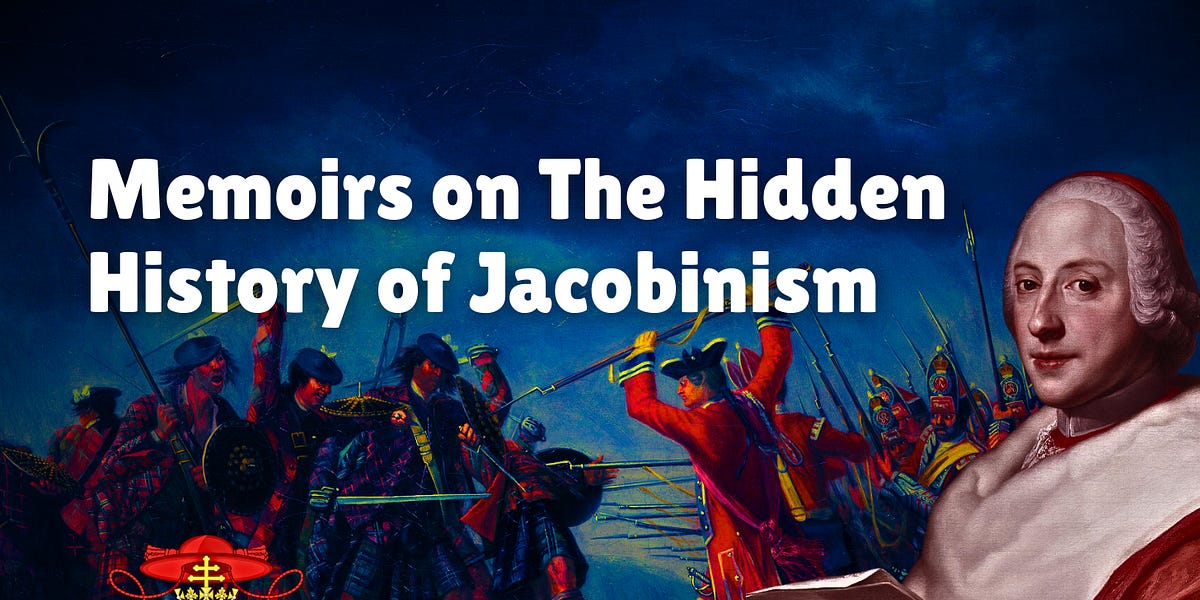
It was the émigré priest Abbe Augustin Barruel who provided the definitive counter-revolutionary analysis in his Memoirs Illustrating the History of Jacobinism. This work became a classic text by taking the events of the Revolution out of the Enlightenment's pseudo-physical framework and re-situating them in classical ethical and political terms. Barruel's Memoirs offered a powerful explanatory model that would profoundly influence later thinkers like Mary Shelley in her critique of revolutionary hubris. This early model of revolutionary control, however, would soon be refined and rebranded under the banner of "science" in the 20th century.
Part II: The Rise of "Scientific" Control Mechanisms
The great innovation of the 20th century was to launder the Illuminist project of control through the seemingly unimpeachable authority of "Science." The revolutionary society was replaced by the psychological clinic and the research foundation, making the old techniques more potent, more pervasive, and far more insidious than their 18th-century predecessors.
4. Psychoanalysis: A New "Technology of the Soul"
The project of psychic control shifted from the secret lodge to the scientific discipline with the rise of Freudian psychoanalysis. In this new form of Illuminism, the techniques of control were medicalized and monetized. Psychoanalysis was the perfection of Weishaupt's Semiotik der Seele—a modern “technology of the soul” that systematized the art of controlling individuals through the confession of their passions.
It offered a secular confessional where, for a price, patients could be absolved of guilt while being permitted to hold onto the very vices that caused it. This created what the source describes as a "vampire-like" relationship: the therapist fostered behavior that begot guilt, thereby binding the patient to an interminable and expensive regimen of therapy.
The cornerstone of Freudian theory, the Oedipus Complex, is interpreted by the source not as a scientific discovery but as a political weapon. Derived from Friedrich Nietzsche's reading of Greek tragedy, it was a tool to "force nature to reveal her secrets" by championing incest as a revolutionary act against the father—and by extension, against "Rome," the symbol of the Christian social order. Freud's epigraph for The Interpretation of Dreams—"If the powers above ignore me, I will move the powers of hell"—is presented as a cryptic statement of this political program.
The subsequent conflict between Sigmund Freud and Carl Jung is framed not as an intellectual disagreement, but as a power struggle over who would control this potent new psychic technology and its wealthy clientele. The case of Medill McCormick, a wealthy American patient treated by Jung, illustrates the stakes. Both men understood that psychoanalysis was a powerful and profitable tool for managing the guilt of the elite. Their break was a battle over who would get to exploit this new technology of the soul.
5. Behaviorism and Advertising: Engineering the Mindless Consumer
Parallel to the development of psychoanalysis, behaviorism emerged as a more overt technology of social engineering. Its aim was not to understand the soul but to predict and control behavior, making it the perfect tool for social engineers seeking to create a populace amenable to management by a new scientific elite.
John B. Watson, the founder of behaviorism, developed a psychology that mirrored his own personal failings. A man who was never in control of his own sexual behavior, he created a system where the concept of self-control had no meaning. For Watson, human beings were simply organic machines reacting to stimuli; reason and consciousness were irrelevant. Behaviorism is therefore not a psychology but a technology of psychic control based on stimulus-response.
This technology was eagerly embraced by plutocrats and large foundations, most notably the Rockefeller Foundation, which saw its potential for creating an "empire of mindless consumers." The project of mass-market advertising required the systematic erosion of traditional authorities—family, religion, ethnicity, and community—and their replacement with "science" and national brand names.
The advertising executive Stanley Resor hired Watson with the explicit goal of creating a "new man" for this consumer society. This ideal consumer was not frugal or bound by tradition but was, in the words of one historian, "reactive, suggestible, and impulsive." By reducing human action to a set of controllable reflexes, behaviorism provided the theoretical justification for an advertising industry dedicated to engineering a passive and easily manipulated public, a project that would be further systematized by the field of public relations.
6. Public Relations: The Invisible Government
As traditional moral structures were deliberately eroded by materialism and consumerism, the resulting social chaos required a new form of management. Public relations, as conceived by pioneers like Edward Bernays, emerged to fill this vacuum, offering a method for an "invisible government" to manage the masses whose passions had been "liberated."
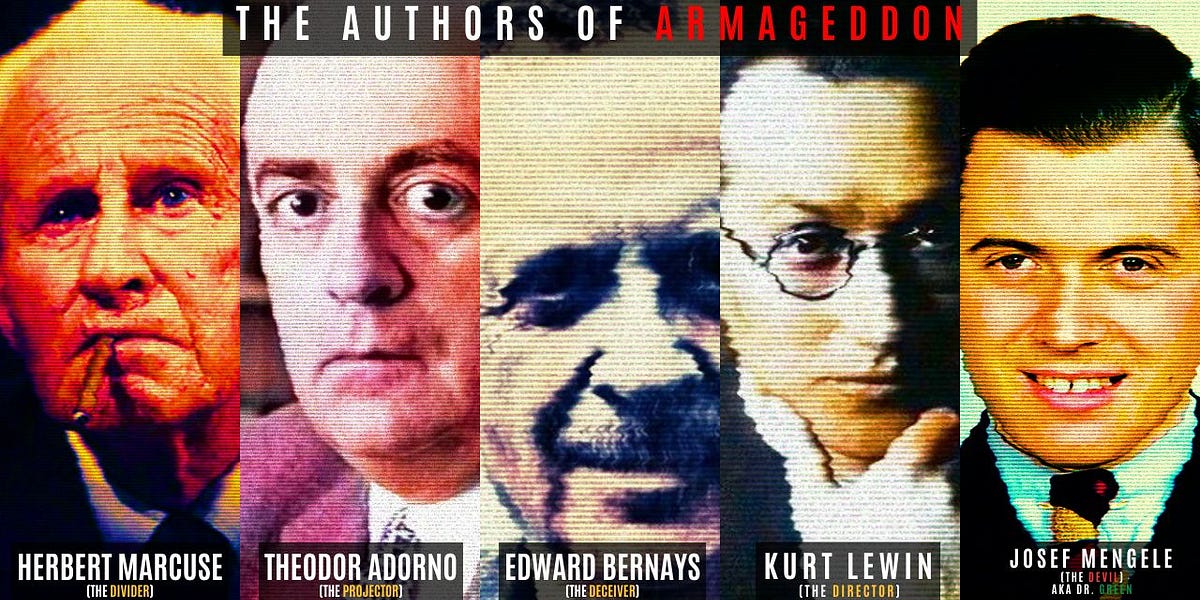
Bernays, Sigmund Freud's nephew, operated from a clear premise. In a "world without God," social chaos was inevitable. Therefore, to "prevent disaster," it was necessary for an elite group of PR counselors to create "man-made gods" and "assert subtle social control." Liberalism, having unleashed the passions by dissolving traditional morality, now required a new instrument to manage the consequences.
The "Torches of Freedom" campaign serves as a paradigmatic case study. Hired by the American Tobacco Company to open the female market for cigarettes, Bernays understood that the taboo against women smoking was primarily sexual. To break it, he had to attack the underlying moral standard. During a 1929 parade, he arranged for a group of fashionable young women to light up their cigarettes, brilliantly linking a consumer product (Lucky Strikes) to a powerful social and sexual ideology (women's liberation). By transforming an act of consumption into a political statement, Bernays not only created a vast new market but also demonstrated the immense power of manipulating passions for both commercial and social ends. These powerful psychological tools, honed in the world of commerce, would soon be applied to the ideological battlefields of the 20th century.
Part III: The 20th-Century Culture Wars
7. Revolutionary Regimes and Sexual Politics
The revolutionary movements of the 20th century became vast laboratories for testing the relationship between sexual liberation and state control. In both Bolshevik Russia and Nazi Germany, the manipulation of sexual mores proved to be a powerful instrument of political consolidation and social engineering.
The Bolshevik experiment is epitomized by the figure of Alexandra Kollontai, the minister of social welfare. Kollontai projected her personal drive for "freedom" from conventional marriage into a state policy aimed at the "withering away of the family." This program resulted in authoritarian measures designed to transfer loyalty from the family to the state. Bolsheviks like Zlata Lilina argued that children needed to be rescued from their parents and nationalized: "They will be taught the ABCs of Communism and later become true Communists. Our task now is to oblige the mother to give her children to us - to the Soviet State." The widespread sexual license that followed led to such profound social collapse and anarchy that the Soviet regime was forced to reverse course, pragmatically reimposing traditional family structures to prevent societal disintegration.
In Nazi Germany, a different dynamic emerged. According to the source, the regime's largely homosexual leadership turned the state's legal and moral apparatus into a weapon against its enemies. The infamous Paragraph 175 was amended in 1935 to criminalize any behavior that could be construed as indicating homosexual inclination. This vaguely worded law provided a potent political weapon, and false accusations of homosexuality were systematically used to defame, imprison, and eliminate political opponents, particularly Catholic clergymen. Thus, the pretext of upholding sexual morality was used for the purpose of political consolidation.
While these European regimes offered overt expressions of political control through sexual politics, a more subtle and arguably more enduring strategy was metastasizing in the United States, cloaked not in the flags of revolution but in the white lab coats of eugenic science.
8. The Eugenic Project and the Catholic Opposition
In the United States, the interests of wealthy, eugenics-minded foundations and bohemian radicals converged around the cause of birth control. This alliance saw contraception as a tool for both social reform and social control, uniting the financial power of families like the Rockefellers with the ideological fervor of activists like Margaret Sanger.
Birth control was promoted as a Malthusian solution to poverty—an argument, dating back to Thomas Malthus, that societal ills stem not from unjust economic distribution but from the poor breeding beyond their means. This framing diverted public attention from demands for economic justice, such as higher wages, and instead placed the blame for poverty on the poor themselves. The creation of Planned Parenthood, particularly its "Negro Program," is presented as a direct continuation of this eugenic goal, explicitly designed to "reduce their birthrate."
The primary intellectual and political opposition to this Malthusian/eugenic agenda came from the Catholic Church. Figures like Msgr. John Ryan of Catholic University argued forcefully that the root of poverty was not overpopulation but an unjust economic system. In opposition to the eugenicists' focus on population control, the Church advocated for economic justice, specifically the concept of a family wage sufficient for a worker to support his wife and children. This fundamental conflict with the Catholic Church would soon escalate into a broader, more sophisticated campaign of psychological warfare.
9. Psychological Warfare and the Subversion of the Moral Order
The post-World War II era saw the various threads of social engineering synthesized into a coordinated campaign of psychological warfare against traditional American morality. The source frames this as a multi-pronged assault, a pincer movement in which the Catholic Church, with its robust defense of sexual morality, was the primary target.
Alfred Kinsey's research, funded by the Rockefeller Foundation, provided the fraudulent "scientific" data. It is presented not as objective science but as an instrument of social control. The source argues that Kinsey's methodology—gathering compromising sexual data on the very figures who controlled his funding—created a dynamic where the threat of blackmail was ever-present, ensuring their continued support for his pre-determined liberationist agenda.
Paul Blanshard, supported by the same liberal elites and foundations, waged the public political war. His popular books, like American Freedom and Catholic Power, framed the Church's moral teachings—its opposition to birth control and divorce—as the central threat to American democracy. Sex, not theology, was the heart of his animus.
Finally, Carl Rogers supplied the psychological tools for internal subversion. Thus, the techniques of psychological warfare, honed in the study of brainwashing, were deployed not against a foreign enemy but against an order of American nuns. Within the Immaculate Heart of Mary (IHM) order, Rogers's encounter groups were used to deconstruct identity, loyalty, and faith under the guise of therapy. This campaign to foster "individual independence" at the expense of institutional vows culminated in the order's implosion—a victory for liberation that proved indistinguishable from institutional annihilation. Paralleling these covert operations was a public political struggle that would become the primary vehicle for this cultural revolution: the civil rights movement.
10. Civil Rights, White Guilt, and the Rejection of the Family
According to the source, the civil rights movement became the primary vehicle for "a vast social, technological, sexual and moral revolution" orchestrated by the liberal establishment. This transformation is starkly illustrated by the controversy surrounding the 1965 Moynihan Report, The Negro Family: The Case for National Action.
Rooted in Catholic social teaching, the report was a groundbreaking policy initiative that identified the deterioration of the Black family structure as the central cause of persistent poverty and proposed strengthening the family as the primary goal of government policy. However, this family-centric approach was vehemently rejected by the Left and the movement's backers. The report's focus on family pathology, illegitimacy, and the need for a "reform of conduct" directly contradicted the ascendant ideology of sexual liberation. Its opponents were unwilling to accept a framework that implicitly criticized sexual behavior, preferring to maintain race and discrimination as the sole explanations for inequality. The defeat of the Moynihan Report marked a pivotal moment: the agenda of sexual liberation was prioritized over economic and social solutions centered on the family.
The source further claims that the internal sexual dynamics of the movement, particularly the role of "white guilt" and the sexual exploitation of white female volunteers by black male leaders, created a culture of resentment that served as a catalyst for the subsequent rise of feminism and other identity-based grievance movements. With a family-centric policy now defeated, the path was clear for a commercially driven model of sexual liberation to become the dominant force in American culture.
Part IV: The Triumph of Libido Dominandi
11. The Pornographic Society: From Liberation to Addiction
The rise of mass-market pornography represents the logical culmination of this historical trajectory. Here, "liberation" is fully realized as a commercial product that systematically fosters addiction, isolation, and, ultimately, control.
The 1970 Lockhart Commission, heavily influenced by Kinsey's legacy, concluded that pornography had no significant negative effects. This finding stands in stark contrast to the lived reality of those caught in the industry. The lives of figures like Bettie Page, who descended from pin-up model to psychosis, and Linda Lovelace, who later described her career in the "chic" film Deep Throat as a form of white slavery, serve as case studies of the devastating human cost. For them, liberation led directly to exploitation and mental breakdown.
Pornography functions as the ultimate tool of control by creating what one psychologist termed the "empty self"—a self that must be continually filled by consumption. The modern sexual liberation championed by pornographers reduces all sex to masturbation, the most profitable and isolating sexual option. It creates a world of docile, addicted consumers whose passions can be endlessly stimulated and monetized.
When the 1986 Meese Commission sought to document the harms of pornography, it was met with a ferocious counter-offensive from the "masturbation industry" and the Media Coalition. This coalition hired powerful PR firms like Gray and Co. to orchestrate a campaign that successfully framed the debate as a First Amendment issue, thereby discrediting the commission's findings and protecting a multi-billion dollar industry built on addiction. The political apotheosis of this movement would arrive with the presidency of Bill Clinton.
12. The Clinton Presidency: A Referendum on the Revolution
The Monica Lewinsky scandal was more than a personal failing; it became a national political crisis that forced a referendum on the entire sexual revolution. The outcome revealed that the esoteric doctrine of the Enlightenment—control through passion—had become the explicit, operative principle of mainstream American political life.
The initial reaction from the "talking class" and feminist leaders was one of condemnation. However, once it became clear that President Clinton would not resign, their position underwent a dramatic reversal. The defense of the president became a defense of the sexual revolution itself. Clinton shrewdly wrapped his political fortunes in the mantle of sexual liberation, forcing his supporters to defend his actions in order to defend their own sexual mores.
Commentators like Maureen Dowd and Anthony Lewis explicitly framed the investigation as an attempt to "overturn the '60s." A vote against Clinton was portrayed as a vote against sexual freedom. This forced the liberal establishment to abandon any pretense of a consistent moral standard and rally behind a leader whose behavior they had previously condemned.
The crisis demonstrated a fundamental political principle: in the absence of a shared moral order, power becomes the only measure of right and wrong. When Demos, the people, abandons morals for the gratification of passion, it guarantees its own subjugation, for the rich and powerful will always get away with more. The Clinton presidency marked the moment when the liberation of passion was no longer a covert strategy of the elite but the publicly acknowledged price of political power.
Conclusion: The Circle of Control
For over two centuries, the incitement of passion under the guise of "liberation" has served as the esoteric doctrine of social and political control. This analysis has traced the evolution of this powerful idea, revealing a consistent strategy applied across different eras and disciplines.
The intellectual lineage of this project descends directly from the philosophical speculations of the Enlightenment, which sought to remove moral obstacles by redefining humanity as a machine devoid of free will. It was first tested in the revolutionary fires of France, then refined into a "scientific" methodology by 20th-century psychology, from the psychoanalytic couch to the behavioral laboratory. This psychological toolkit was then deployed in advertising, public relations, and large-scale political engineering, culminating in the culture wars that targeted traditional morality and its primary defender, the Catholic Church. The final stage of this evolution is the triumph of a commercially-driven, pornographic culture that transforms citizens into isolated, addicted consumers.
The project of Libido Dominandi thus results in a society where individuals, believing themselves to be freer than ever, become thralls to the very passions that are systematically manufactured and manipulated for political and financial gain. This completes the paradoxical circle described by St. Augustine, where the insatiable lust for dominion results in a state of total and willing bondage.


![Image for World Revolution [Nesta Webster]](https://substackcdn.com/image/fetch/$s_!Rqkv!,w_1200,h_600,c_fill,f_jpg,q_auto:good,fl_progressive:steep,g_auto/https%3A%2F%2Fsubstack-video.s3.amazonaws.com%2Fvideo_upload%2Fpost%2F177953241%2F44ce7142-82b9-47e0-8a1c-1849c9597e1f%2Ftranscoded-1762279406.png)

![Image for The Righteous Mind [Jonathan Haidt]](https://substackcdn.com/image/fetch/$s_!LY-w!,w_1200,h_600,c_fill,f_jpg,q_auto:good,fl_progressive:steep,g_auto/https%3A%2F%2Fsubstack-post-media.s3.amazonaws.com%2Fpublic%2Fimages%2F37aafe78-e2f3-4a47-9efc-a596a917d921_1456x1048.png)
![Image for Social Engineering: Tavistock & Mind Control [Daniel Estulin]](https://substackcdn.com/image/fetch/$s_!G4Ei!,w_1200,h_600,c_fill,f_jpg,q_auto:good,fl_progressive:steep,g_auto/https%3A%2F%2Fsubstack-post-media.s3.amazonaws.com%2Fpublic%2Fimages%2F30a72016-7b65-4d22-ba8b-dd1f211d84de_1456x1048.jpeg)

![Image for The Marketing of Evil Exposed: Propaganda, Fabricated Science [David Kupelian]](https://substackcdn.com/image/fetch/$s_!Gqyk!,w_1200,h_600,c_fill,f_jpg,q_auto:good,fl_progressive:steep,g_auto/https%3A%2F%2Fsubstack-video.s3.amazonaws.com%2Fvideo_upload%2Fpost%2F178308989%2Fec2e3ffc-9feb-46b9-a891-af135299212b%2Ftranscoded-1762551772.png)